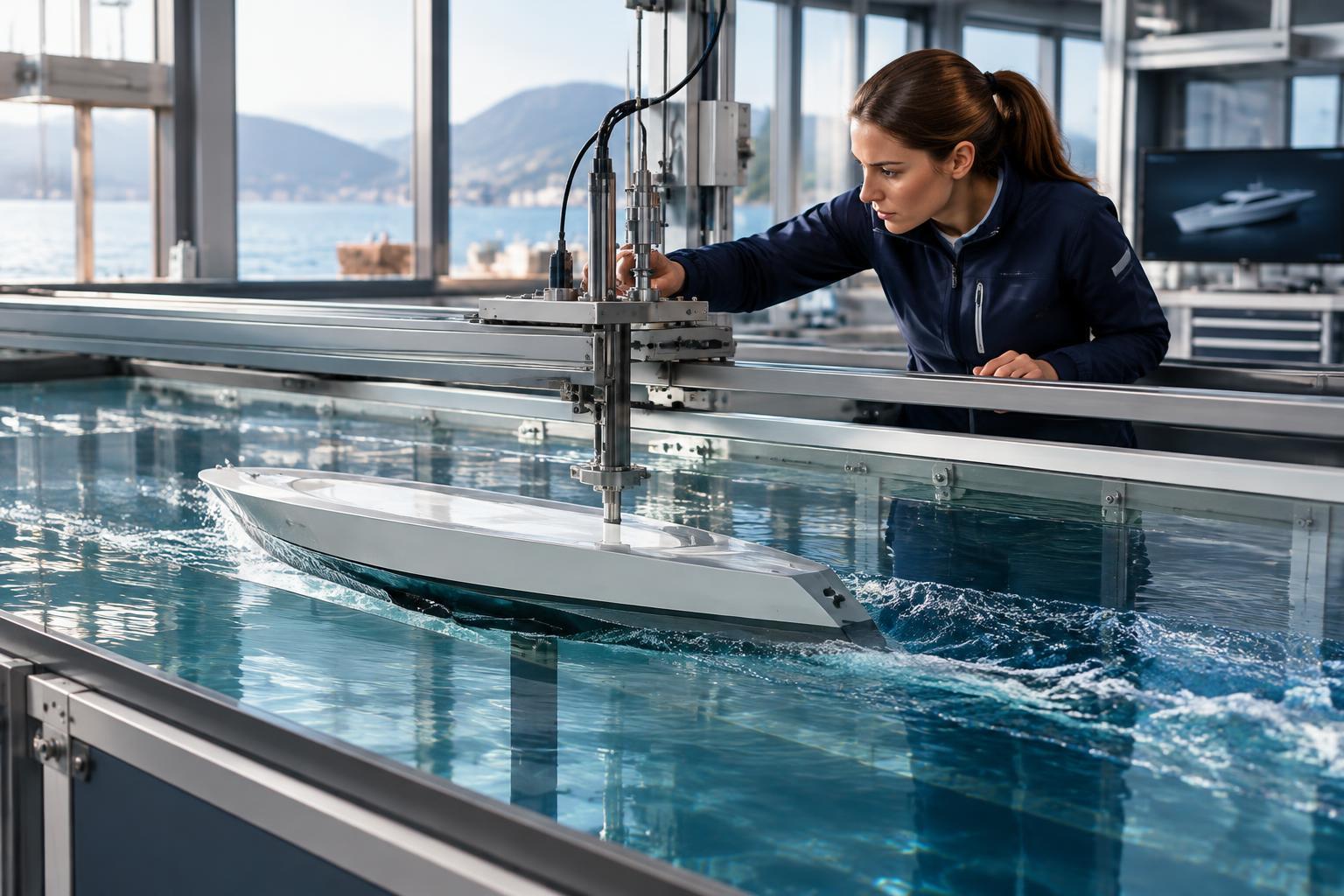
Marine hydrodynamic simulation services evaluate how a yacht or boat hull moves through water before physical construction, modification, or propulsion integration. They use computational fluid dynamics (CFD), a digital method for modelling fluid flow, to inform decisions on hull resistance, trim, wake behaviour, propeller interaction, and energy demand.
For an electric yacht project, this work is particularly valuable because every unnecessary unit of resistance draws more energy from the battery system. A well-defined simulation programme does not promise a fixed range or speed; it gives the design team a clearer technical basis for balancing performance, comfort, packaging, and operational intent.
What a hydrodynamic simulation should assess
A credible study begins with the vessel’s intended operating profile. The relevant questions include whether the yacht will spend most of its time at displacement speed, semi-planing speed, or planing speed; how heavily it is expected to be loaded; and the sea states in which it will normally operate. Hull geometry alone is not enough, since appendages, shaft brackets, rudders, foils, water intakes, and transom details can all affect flow.
Resistance analysis is usually the foundation. It separates the forces opposing motion into useful engineering categories, including frictional resistance from water moving along the wetted hull surface and wave-making resistance caused by the hull generating waves. The resulting resistance curve shows how demand changes across the speeds selected for the study, helping teams identify operating points that suit the propulsion and energy architecture.
Why simulation matters for electric propulsion
Electric motors deliver strong torque with precise control, but the battery capacity required for a particular duty cycle is still governed by the power needed at the propulsor. Hydrodynamic optimisation can therefore be as important as motor selection. Small changes to hull form, displacement, appendage arrangement, or running attitude can alter the load the propulsion system must overcome.
Simulations can also investigate propulsor interaction. This considers the water flow arriving at a propeller or waterjet and the disturbance created downstream. Poor inflow can reduce efficiency, contribute to vibration, and increase the likelihood of cavitation, where local pressure falls enough for vapour bubbles to form and collapse. Cavitation assessment depends on the geometry, operating condition, and marine environment, so it should not be inferred from a hull model alone.
Trim, wake, and ride quality
Trim is the fore-and-aft angle a vessel adopts when underway. Excessive bow-up or bow-down trim can increase drag and affect visibility, comfort, and spray behaviour. A simulation study can compare running attitudes and, where appropriate, assess whether hull refinements, weight distribution changes, or active devices such as trim tabs warrant further engineering review.
Wake analysis is relevant for vessels operating near shore, in confined waters, or alongside other craft. It can also help designers understand the flow field around the stern, where propulsion equipment must work effectively. CFD is a powerful design tool, but it represents defined conditions rather than every possible weather pattern, loading case, or operator input.
What to expect from a service scope
A useful proposal for marine hydrodynamic simulation services should state the design questions being answered, the hull data required, the operating conditions modelled, and the assumptions applied. Inputs may include a hull surface model, estimated displacement and centre of gravity, appendage geometry, propulsion arrangement, and target speed range. If these inputs are uncertain, the study should identify where sensitivity analysis is needed.
The deliverables should be understandable beyond the engineering team. They may include resistance and power-demand plots, pressure and flow visualisations, trim observations, comparison cases, and a concise explanation of design implications. For a propulsion project, the findings should connect clearly to motor loading, cooling requirements, battery integration, and realistic charging strategy. Readers considering a full system specification can also review how to evaluate propulsion options before procurement.
A worked design example
Consider a yacht refit where battery weight moves the vessel’s centre of gravity aft. A simulation can compare the original loading condition with the proposed arrangement at relevant speeds, then show whether the changed trim increases resistance or alters propeller inflow. The engineering response might be to revise equipment placement, refine appendage geometry, or investigate a different propulsor arrangement; the correct option depends on the actual hull, available space, and intended operation.
Choosing the right engineering partner
Ask whether the provider can connect hydrodynamic findings to the wider vessel system rather than treating CFD as an isolated visual exercise. Yacht design, composite construction, electric propulsion, battery mass, thermal management, and control strategy influence one another. Where a new concept is being developed, simulation should be accompanied by a transparent plan for design validation appropriate to the project stage.
For refits, obtain accurate as-built information before relying on conclusions. Hull condition, fouling, loading variation, existing machinery, and installation constraints can materially affect outcomes. Any structural changes, safety requirements, or approval obligations must be assessed against the rules that apply where the vessel is built and operated.
Plan the next technical decision
Marine hydrodynamic simulation is most valuable when used early enough to guide meaningful choices, yet detailed enough to reflect the vessel that will actually be built or upgraded. Explore Aqualith Marine projects, hydrodynamic optimisation, and marine engineering consulting to define a simulation scope aligned with your yacht’s propulsion, efficiency, and operating objectives.
Leave a Reply