Category: Uncategorized

  • Size the battery around the voyage

    Size the battery around the voyage

    The central trade-off is simple: more battery creates more usable range, but it also adds weight, volume, cost and charging time. To answer how much battery for electric boat operation, begin with the energy required for the intended voyage—not with the motor’s headline power rating.

    A battery pack must support the normal route, a sensible reserve and the boat’s real operating conditions. The resulting capacity is a system-level decision involving hull resistance, speed, onboard loads, charging access and the limits of the battery installation itself.

    Start with energy, not battery capacity

    Motor power is measured in kilowatts, while battery capacity is measured in kilowatt-hours. Power describes the rate at which energy is used; capacity describes the energy available over time. A high-power motor may draw little energy when manoeuvring, yet consume it rapidly when pushing a planing hull at speed.

    The useful starting point is the boat’s energy consumption across its actual duty cycle: leaving berth, acceleration, cruise, periods at low speed, hotel loads and return. Hotel loads are the non-propulsion consumers such as lighting, refrigeration, navigation equipment and climate systems. On a quiet displacement passage they can become a meaningful share of total demand.

    Turn the route into usable energy

    Calculate the route energy first, then add the reserve appropriate to the consequences of arriving with less energy than expected. Conditions matter. Wind, waves, current, fouled underwater surfaces, passenger load and repeated acceleration can all increase consumption beyond calm-water expectations.

    Next, distinguish nominal pack capacity from usable capacity. Battery management systems commonly preserve an operating window rather than allowing the full nominal capacity to be discharged. That protects battery condition and maintains operational margin. Energy also passes through cables, inverters, motors and driveline components, each with losses.

    In principle, pack capacity must cover route energy plus reserve after allowing for the usable battery window and system losses. A credible proposal should show each assumption rather than presenting a single range figure without context. For a deeper view of the components involved, see how propulsion hardware works together.

    Recognise the signs of a mismatch

    A boat that appears to have adequate battery on paper may still be incorrectly sized for its use. The most recognisable symptom is a voyage plan that works only at one carefully chosen speed. If reducing speed slightly transforms the predicted range, hull resistance is likely dominating the energy budget, and the preferred cruise speed needs closer scrutiny.

    Another warning is a large difference between expected and observed energy use on familiar routes. Check the route profile before blaming the battery: frequent throttle changes, sea state, trim, loading, cooling demand and auxiliary equipment may explain the gap. Repeated charging immediately after routine outings can also indicate that the pack was designed around best-case conditions rather than normal use.

    Check the constraints that alter the answer

    Design factorEffect on battery sizingWhat to verify
    Hull and speedResistance can rise sharply as speed increasesEnergy use across the planned speed range
    Battery locationMass distribution affects trim and handlingStructural space, access and centre of gravity
    CoolingHeat can restrict sustained power and chargingCooling circuit capacity in expected conditions
    Charging planAvailable time shapes practical daily rangeBerth supply, connector compatibility and turnaround time

    Battery mass and placement deserve particular attention in performance-oriented boats. Adding capacity aft, for example, may alter running attitude and increase resistance, which partly erodes the range the additional battery was intended to provide. The battery, hull and propulsion system should therefore be assessed as one package.

    Set the design decision before selecting hardware

    Define the voyage that must be completed reliably, the reserve that remains untouchable in normal planning, and the charging opportunity available before the next departure. Only then is it sensible to compare battery architectures, motor ratings and charging equipment. Aqualith Marine can support this process through marine battery integration, hydrodynamic optimisation and propulsion engineering.

    Before proceeding, verify the measured energy consumption of the intended route at the speed you genuinely expect to use.
  • Electric Yacht Powertrain Engineering Explained

    Electric Yacht Powertrain Engineering Explained

    Electric yacht powertrain engineering is the process of designing the battery, power electronics, electric motor, driveline, cooling and control systems as one integrated propulsion system. A successful design starts with the yacht’s real operating profile, because speed, hull resistance, onboard loads, charging access and expected time underway all affect the architecture.

    A powertrain is more than an electric motor

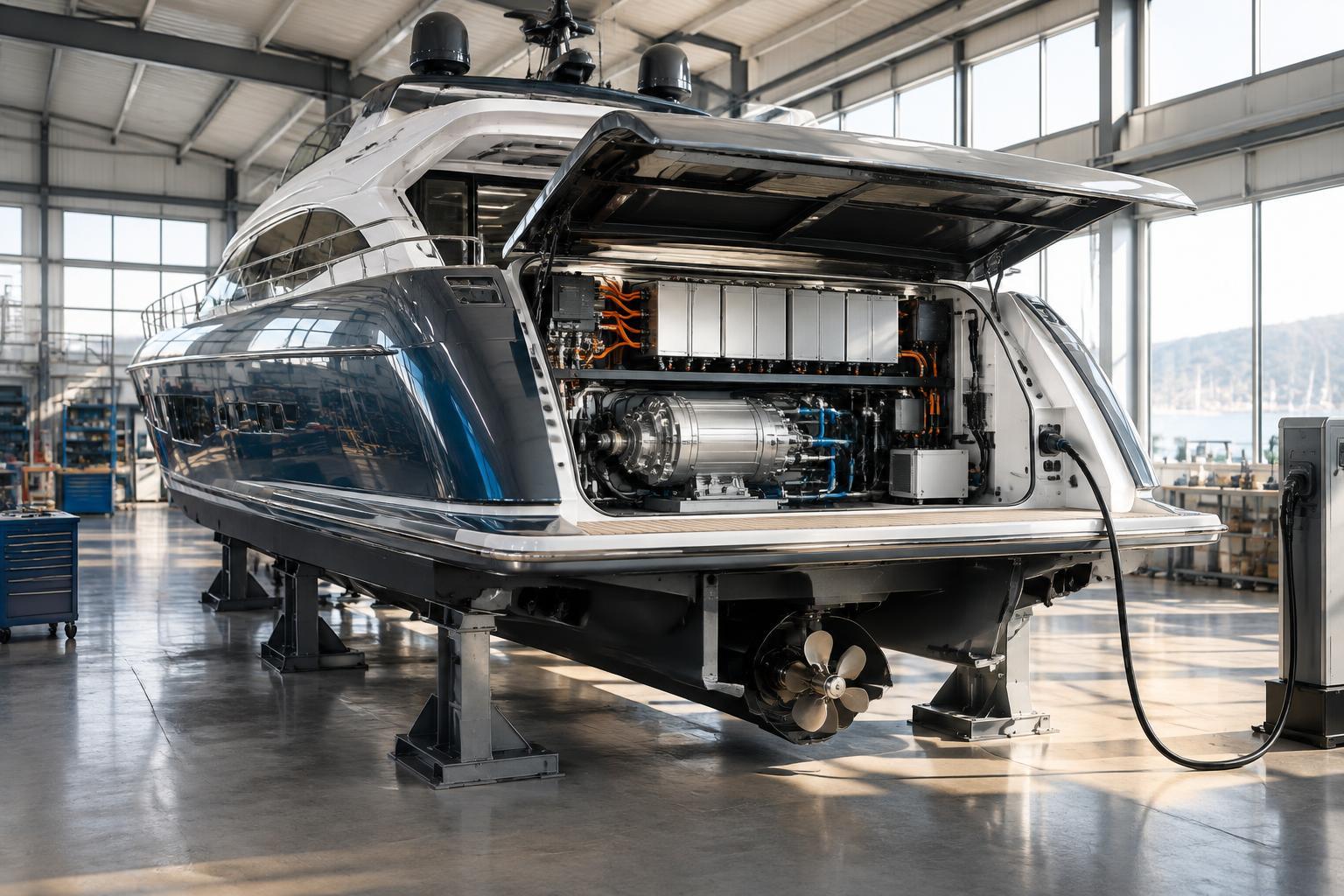
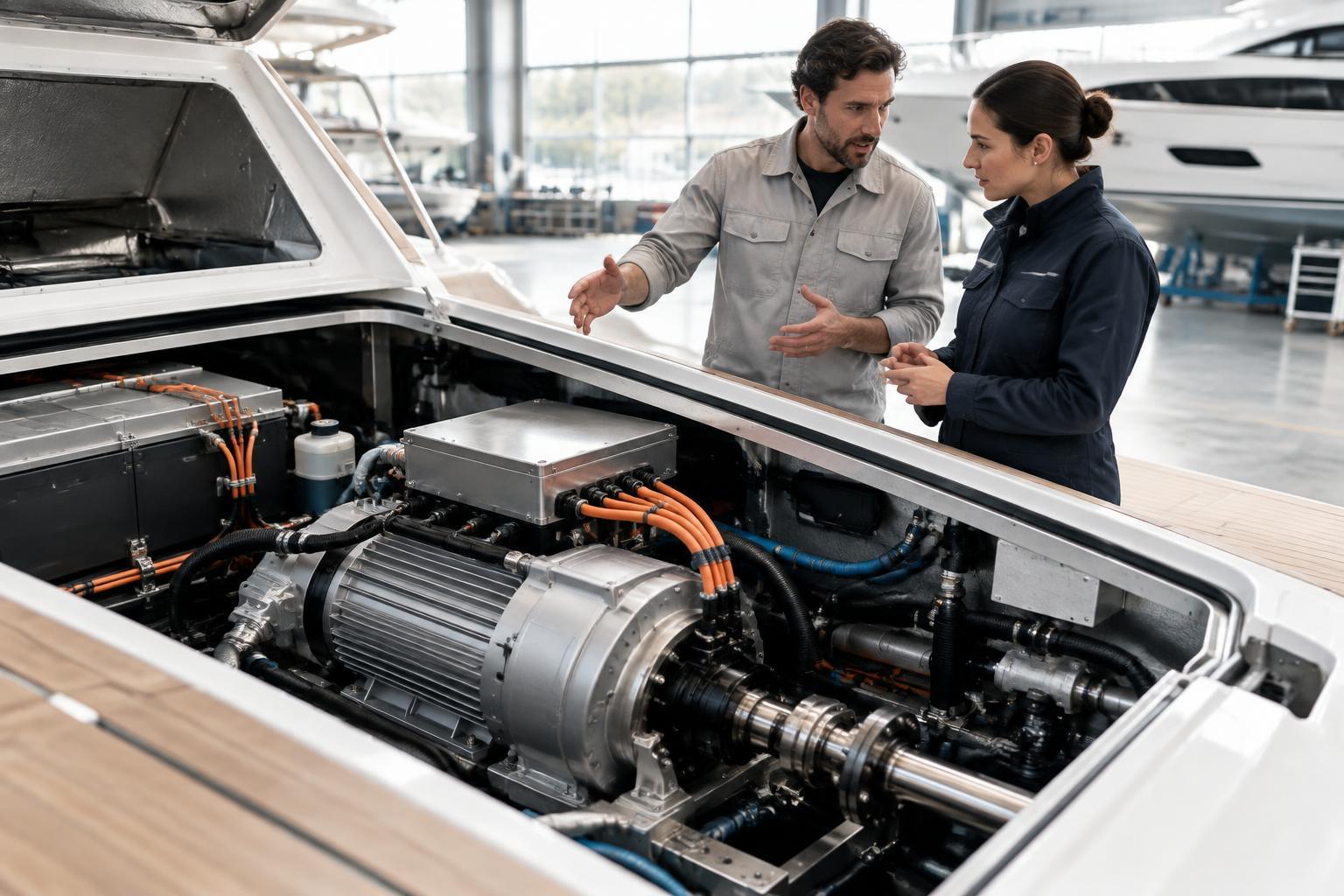
    It is tempting to frame an electric conversion or new-build project around motor output alone. In practice, the motor is only one part of an energy chain. Stored energy leaves the battery through protected high-voltage cabling, is conditioned by an inverter, converted into mechanical torque by the motor and delivered to the water through a shaft, saildrive, pod or other propulsion arrangement.

    Each interface needs deliberate engineering. The inverter controls motor speed and torque, while the battery-management system monitors cell condition and helps keep the battery within its intended operating limits. Contactors, fuses, isolation arrangements and emergency shutdown functions form part of the high-voltage safety strategy. The arrangement must also accommodate service access, cable routing, vibration, moisture exposure and the yacht’s structural layout.

    This system view distinguishes a credible engineering brief from a component-shopping exercise. A technically capable motor cannot compensate for insufficient usable energy, a mismatched propeller, restricted cooling flow or a hull that demands too much power at the intended cruising speed.

    Begin with the operational brief

    Powertrain requirements should be defined before selecting equipment. The brief should establish whether the yacht is intended mainly for quiet harbour movement, day cruising, extended displacement passages, performance-oriented use or a mixture of these conditions. It should also identify hotel loads, meaning the electrical demand from equipment such as climate control, lighting, galley systems, navigation electronics and domestic appliances.

    These demands matter because propulsion and hotel loads often draw from the same energy reserve. A design that appears suitable when considering propulsion in isolation may provide a different onboard experience when auxiliary consumption, reserve expectations and charging time are included. Environmental conditions also matter: sea state, water temperature, fouling, wind and payload can materially change energy use.

    For this reason, projected range should be treated as a scenario rather than a fixed promise. It depends on how the yacht is operated and maintained, as well as the route and available charging infrastructure. Early modelling can clarify these trade-offs before machinery spaces, battery locations and charging arrangements are committed.

    Engineering the energy storage system

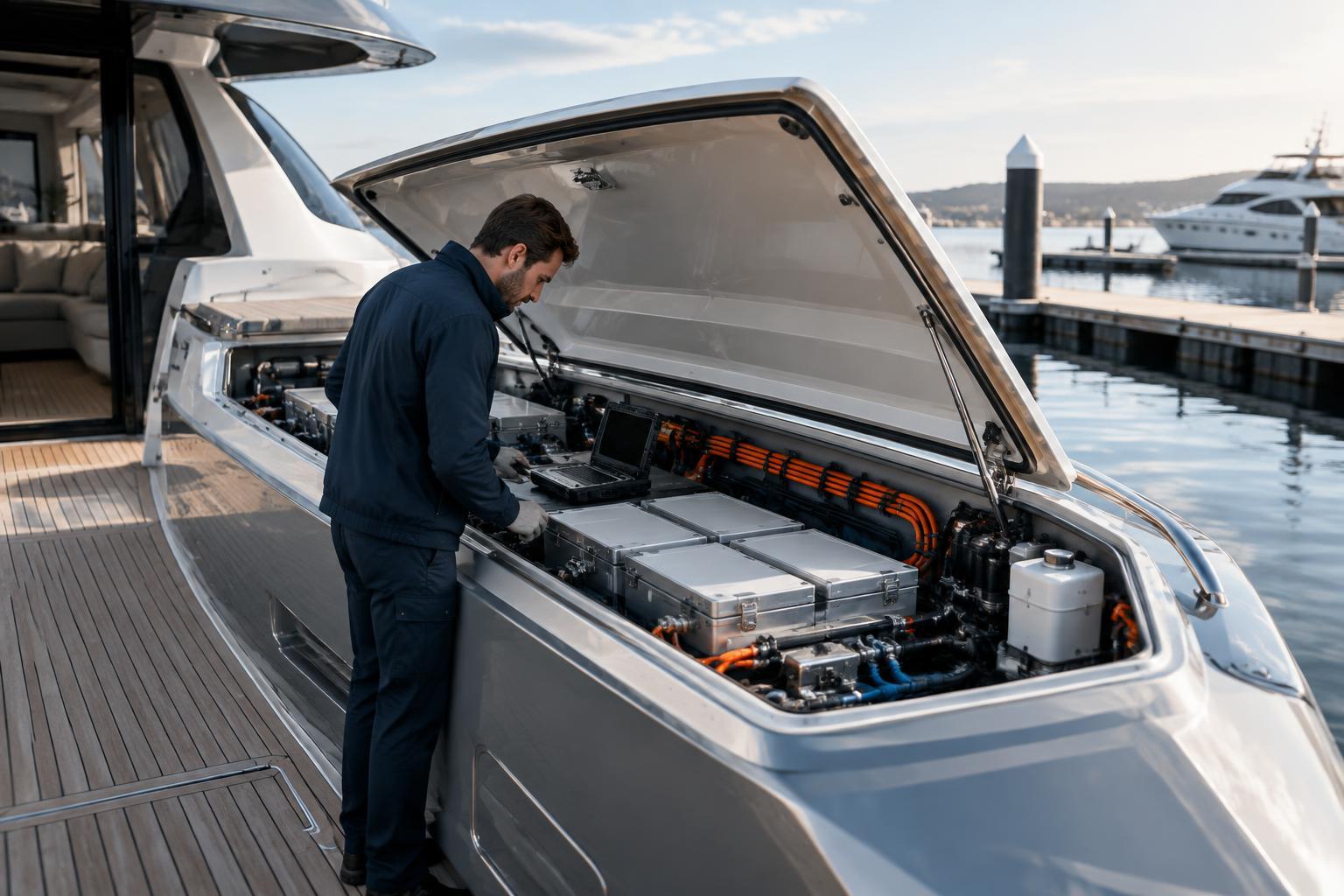
    Marine battery integration involves more than fitting modules into unused volume. Battery mass affects displacement, trim and structural loading, while the location of that mass influences stability and motion. Designers must balance a low, protected position with ventilation, access, separation from heat sources and practical installation routes. The enclosure and surrounding structure must be considered as part of the yacht, not as an afterthought.

    Thermal management is equally important. Batteries, inverters and motors generate heat when delivering or accepting power, and marine environments add challenges including salt air, confined compartments and changing water temperatures. Liquid cooling, air cooling or a combined approach may be appropriate depending on the equipment and duty cycle. The selected approach must manage heat reliably without creating unnecessary complexity or new maintenance burdens.

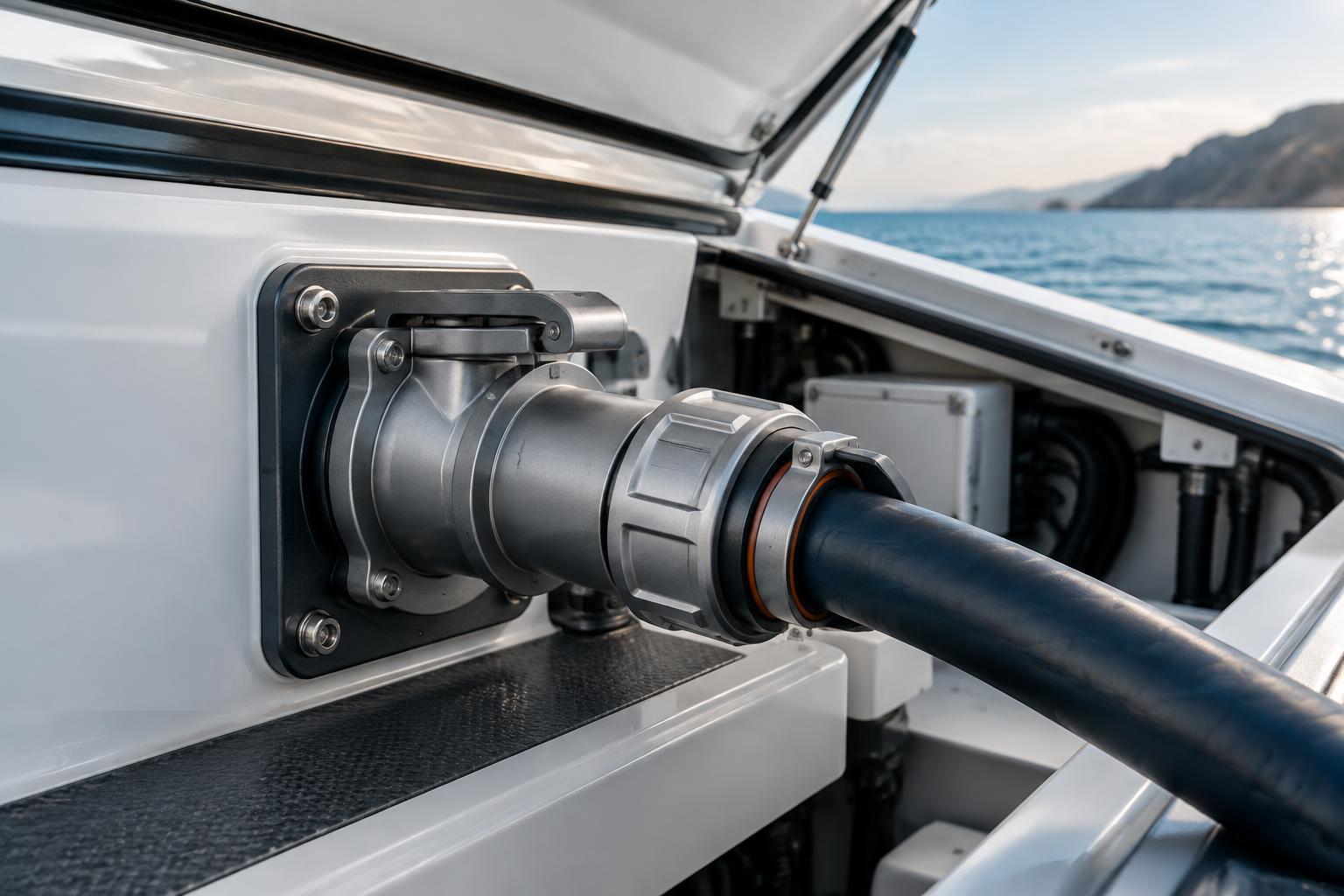
    Charging architecture should be reviewed at the same stage. Shore-power capability, connector compatibility, onboard charging equipment and expected turnaround time need to align with the owner’s likely berthing and itinerary. Where local electrical or maritime requirements apply, the project team should verify the applicable rules with the relevant authorities and classification bodies rather than assuming a generic arrangement is acceptable.

    Motor, driveline and propeller matching

    High-performance electric motors provide immediate torque and precise control, but their benefits depend on correct matching. A direct-drive system can reduce mechanical complexity where motor speed suits the propeller. A reduction gearbox may be justified when it allows the motor and propeller to operate more efficiently across the required duty range. Pod and saildrive arrangements can simplify some packaging decisions, while conventional shaft systems may better suit other hull forms, service preferences or refit constraints.

    Propeller selection is central to electric yacht powertrain engineering. Diameter, pitch, blade area and rotational speed influence thrust, cavitation risk and efficiency. Cavitation is the formation and collapse of low-pressure vapour bubbles around a propeller; it can reduce efficiency, create noise and damage surfaces over time. Hydrodynamic analysis should therefore inform propulsion selection rather than follow it.

    Hull resistance is the other half of the equation. A refined hull, clean appendages and appropriate weight distribution reduce the power needed to achieve a given speed. This is why powertrain design and naval architecture should progress together, particularly for yachts intended to operate efficiently over a defined speed range.

    Controls, monitoring and commissioning

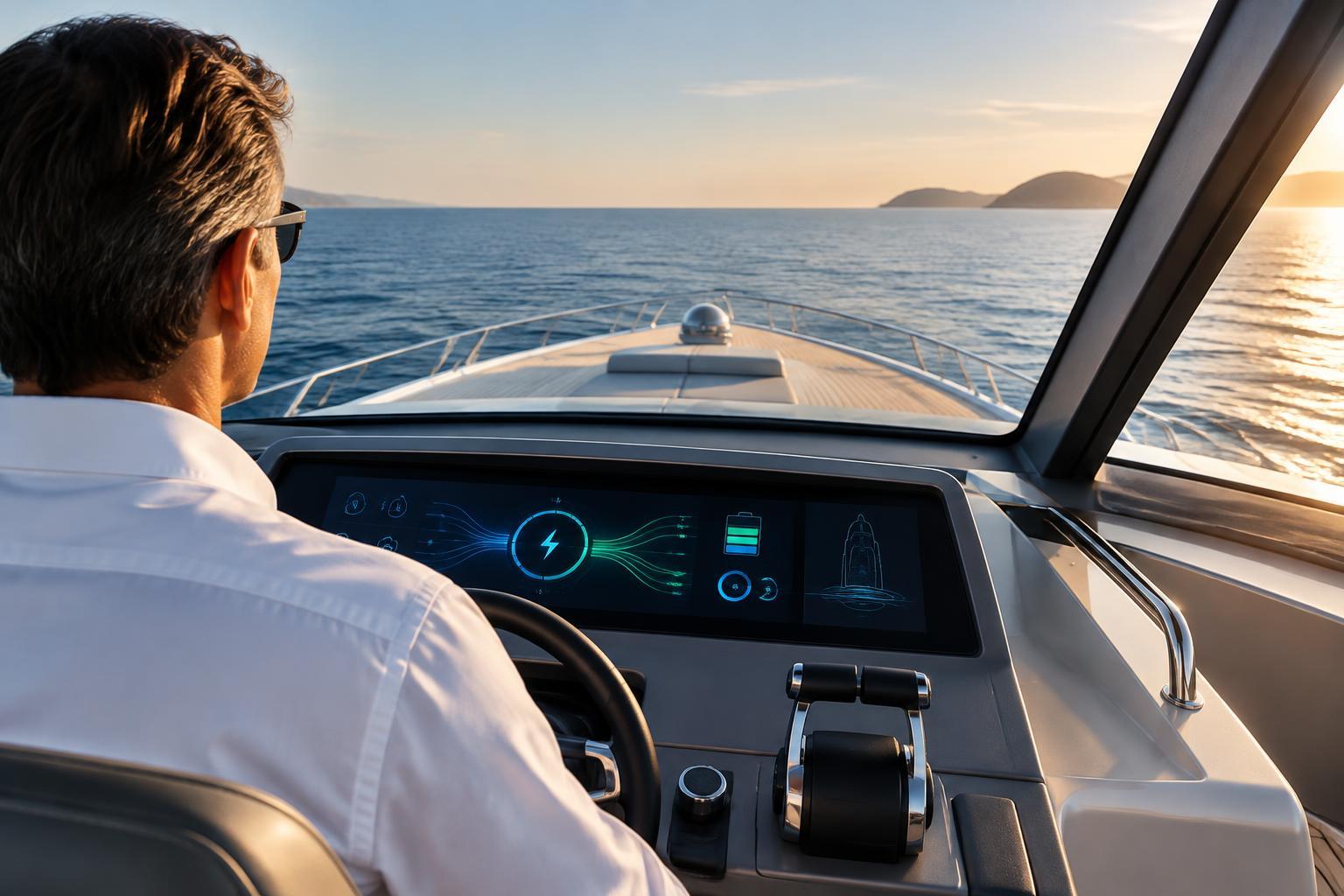
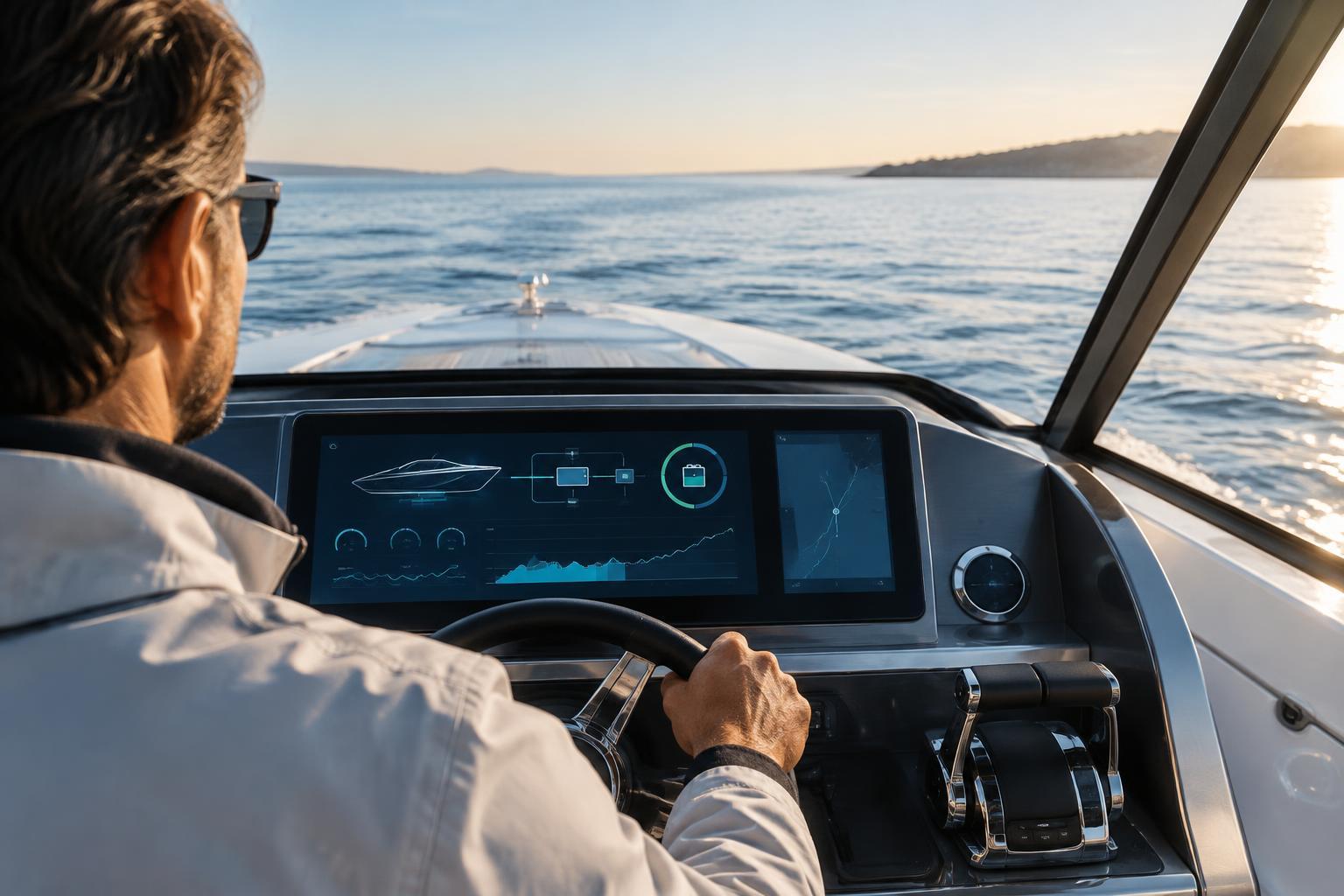
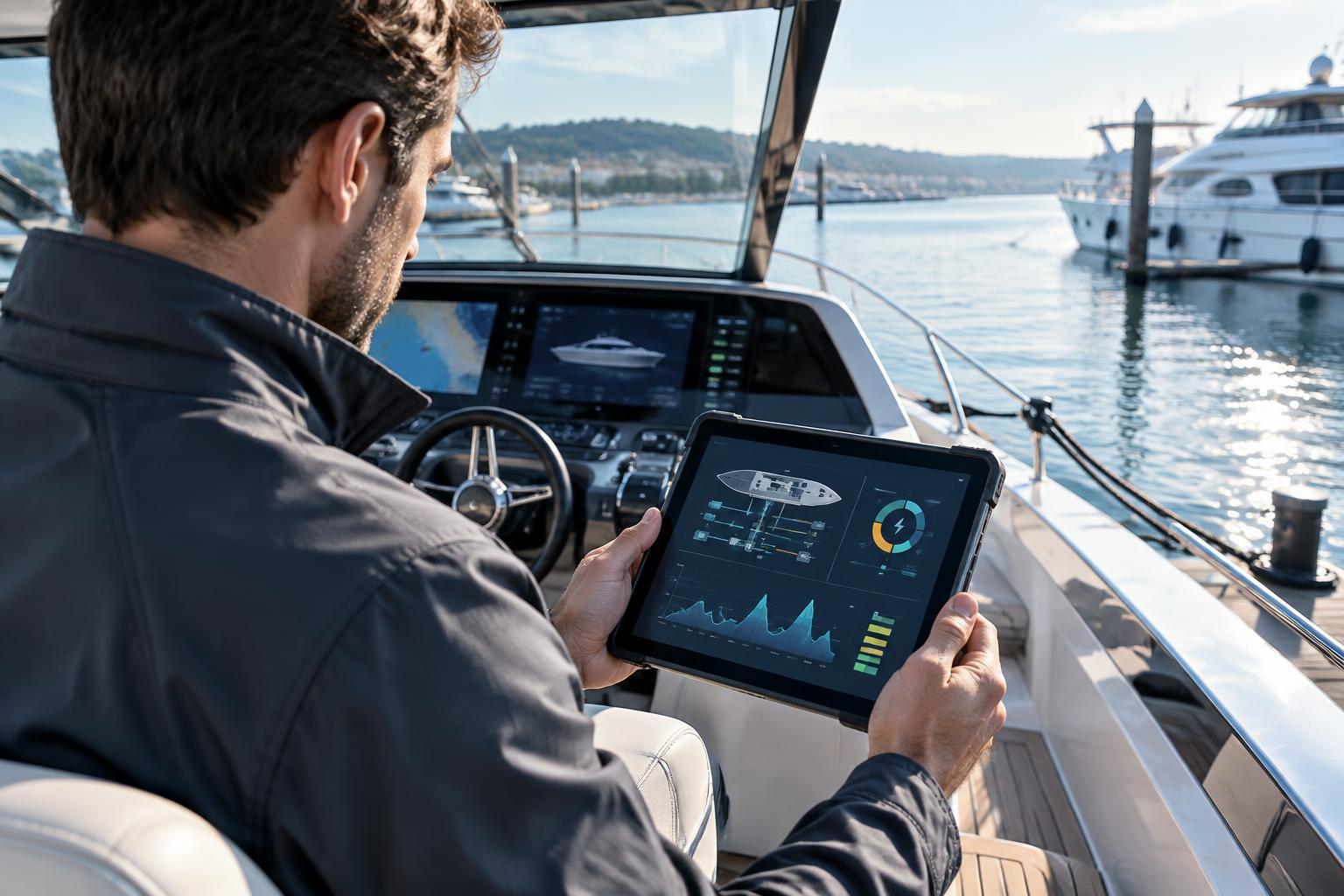
    A modern powertrain needs coordinated control logic that gives the operator predictable response while protecting the equipment. The helm interface should present clear information on available energy, power demand, charging state, temperatures and system alerts without overwhelming the user. Smart navigation functions can support more informed energy planning when integrated thoughtfully with the vessel’s wider systems.

    Commissioning should validate the installed system as a whole, including cooling performance, charging behaviour, propulsion response, alarm functions and fail-safe modes. It is also the stage to confirm that software settings, cable terminations and mechanical alignments reflect the approved design. A structured propulsion development process helps keep these interdependent decisions visible from initial concept through integration.

    Develop a project-ready powertrain brief

    For a new build, refit or prototype, the strongest next step is to translate intended use into a coordinated engineering brief before committing to major components. Explore Aqualith Marine projects, technologies and marine engineering services to assess how propulsion development, battery integration, hydrodynamic optimisation and smart navigation can support the yacht you intend to build or upgrade.

  • Yacht Energy Efficiency Consulting: A Practical Brief

    Yacht Energy Efficiency Consulting: A Practical Brief

    Yacht energy efficiency consulting is a structured engineering review of how a vessel converts stored or generated energy into movement, onboard comfort and operational capability. It identifies where energy is being lost or unnecessarily consumed, then develops practical improvements around the yacht’s actual routes, speeds, loading condition and charging arrangements.

    For an electric or hybrid yacht, efficiency is not simply a question of installing a larger battery. Battery capacity, propulsion demand, hull resistance, auxiliary loads and operating habits all interact, so the most valuable decisions are made at system level.

    What a yacht energy efficiency review should establish

    A useful engagement starts with an operational baseline. The consultant should understand how the yacht is used rather than apply a generic duty cycle: typical passage distances, time at displacement and planing speeds, guest loads, tender use, overnight hotel loads and the availability of shore charging can all materially change the answer.

    “Hotel load” describes electricity used by systems other than propulsion, such as climate control, lighting, galley equipment, pumps and entertainment systems. On a yacht that spends long periods at anchor, this demand can be as important to the energy plan as power delivered to the propeller.

    From design assumptions to measured operating patterns

    For a new build or major refit, consulting can review design assumptions before equipment selection is fixed. For an operating yacht, the process normally examines available onboard logs, energy-management data and machinery information, then compares expected demand with real use. The quality and duration of available data will determine how confidently patterns can be identified.

    The review should also consider environmental conditions. Sea state, fouling, water temperature, wind, current and loading condition affect resistance and therefore propulsion energy. A responsible assessment distinguishes persistent system issues from variations caused by a particular voyage or operating environment.

    Where energy savings and operational gains are found

    Improvement opportunities often sit between disciplines. A propulsion motor may be highly efficient at its intended operating point, yet the overall yacht can still use more energy than necessary because of propeller matching, shaft-line losses, cooling demand, hull condition or an unsuitable speed profile.

    Area reviewedWhat the assessment examinesPotential outcome
    Hull and appendagesResistance, trim, surface condition and flow around features below the waterlinePrioritised hydrodynamic improvements
    Propulsion and batteriesMotor loading, propeller matching, battery operating limits, cooling and energy distributionBetter alignment between power demand and stored energy
    Onboard electrical loadsHotel-load profiles, control settings and power-management logicReduced avoidable demand without compromising essential functions

    Hydrodynamic work is particularly relevant because resistance rises with speed and hull form. Depending on the vessel and intended use, analysis may consider trim, appendages, propeller inflow and the trade-off between cruising speed and energy draw. More detailed modelling may be appropriate where a proposed change is substantial; simulation-led hull assessment can help evaluate these interactions before physical modifications are committed.

    Electric, hybrid and conventional propulsion considerations

    Electric propulsion can offer precise control, quiet operation and a direct connection between energy storage and propulsion, but range remains governed by battery capacity, vessel resistance and operating conditions. Batteries also add mass, require carefully designed thermal management and need a charging plan that reflects the available infrastructure.

    Hybrid arrangements can provide operational flexibility by combining electrical energy with onboard generation. They should be assessed fairly: they may extend operating capability in some use cases, but introduce additional machinery, controls, maintenance considerations and conversion losses. A consultant should model the intended operating profile rather than assume one architecture is inherently more efficient.

    Power-management strategy is central to both approaches. It governs how energy is allocated among propulsion, batteries, charging and onboard services while respecting equipment limits. For owners considering system changes, understanding how onboard energy is coordinated provides useful context before defining the scope of an upgrade.

    What to expect from the consulting deliverable

    A commercially useful report should rank recommendations by likely operational value, technical dependencies and implementation complexity. It should separate no-regret operational changes from work requiring design development, supplier input, yard access or further validation. Where savings cannot be confirmed without additional measurements or trials, that limitation should be stated clearly.

    The output should also connect engineering choices to decisions an owner or project team must make: acceptable passage speeds, charging windows, desired onboard comfort, equipment redundancy and the intended balance between range and performance. Regulatory, electrical safety and marina-connection requirements vary by location and vessel circumstances, so these must be verified with the relevant local authorities and qualified project professionals.

    Plan the next engineering step

    Commission yacht energy efficiency consulting when there is a defined decision to make, whether that is an electric propulsion concept, a battery integration project, a hybrid refit or a performance-led design revision. Explore Aqualith Marine’s engineering services to develop a vessel-specific pathway that connects hydrodynamics, propulsion, energy storage and smart onboard control.

  • High Performance Boat Design Consultancy: What to Expect

    High Performance Boat Design Consultancy: What to Expect

    A high performance boat design consultancy brings hull form, propulsion, energy storage and onboard systems into one technically coherent vessel concept. It is most valuable when an owner, builder or investor needs confident design decisions before committing to engineering, tooling or major equipment purchases.

    For an electric or hybrid yacht, performance is not simply top speed. It also includes controllability, efficiency at the intended cruising speed, ride quality, noise, range planning, thermal management and practical service access.

    What a specialist consultancy should solve

    High-performance boats are systems rather than collections of premium components. A powerful electric motor cannot compensate for an inefficient hull, poorly matched propeller, excessive displacement or battery modules positioned without regard for trim and structural load paths.

    A consultancy translates the intended use into technical priorities. This begins with an operating profile: expected passenger and payload conditions, typical route lengths, desired speed modes, sea states, berth access, charging opportunities and the level of redundancy required. These inputs determine whether a conventional planing hull, a semi-displacement form, a displacement yacht or a hydrofoil concept is appropriate.

    The work should also identify trade-offs early. Larger battery capacity can extend usable energy reserves, but increases weight, volume, cooling demand and cost. Hydrofoils can reduce hydrodynamic drag once flying, yet introduce structural, control-system and low-speed operating considerations. A credible brief makes such compromises visible rather than treating them as afterthoughts.

    Core design areas

    Hull, structure and hydrodynamics

    Hydrodynamics is the study of how water flows around a vessel. In practice, it informs resistance, running trim, wake, stability and ride behaviour. Hull geometry, appendages, propulsor placement and weight distribution must be considered together, especially where efficiency at sea is a central objective.

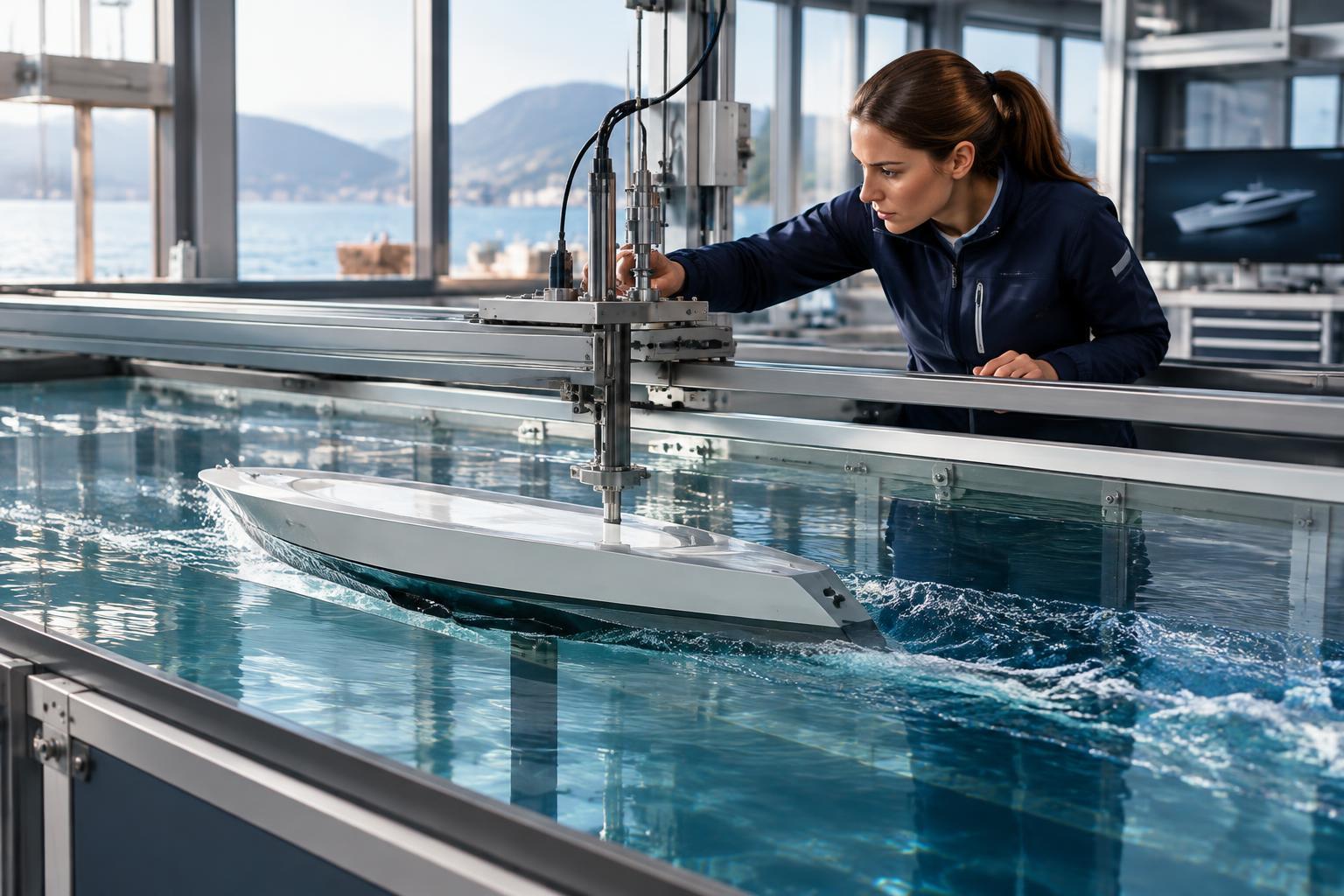
    Depending on project maturity, the consultancy may recommend computational fluid dynamics, commonly called CFD, or model-scale testing. These methods support informed comparisons between viable hull options; they do not remove the need to define realistic loading and operating conditions. Hydrodynamic simulation work can add useful evidence before the design is frozen.

    Propulsion and energy integration

    Electric propulsion architecture includes motors, inverters, gear reduction where required, shafts or pod drives, propellers, battery modules, charging equipment and control systems. The integration task is to match torque delivery and propeller loading to the hull’s resistance curve while protecting equipment from heat, vibration, moisture and corrosion.

    Commercially available electric marine equipment can suit many applications, but it still requires vessel-specific packaging and controls engineering. Prototype components or experimental foil-control systems require a separate validation plan, appropriate risk management and realistic allowances for development time. Cooling, high-voltage isolation, emergency shutdown arrangements and access for inspection should be designed into the vessel from the outset.

    A disciplined consultancy process

    1. Set the mission and constraints. Define how the boat will be used, where it will be kept, who will operate it and which outcomes matter most. Local requirements for construction, operation, charging infrastructure and certification must be checked with the relevant maritime authorities and classification bodies.
    2. Develop and compare concepts. Establish feasible hull, propulsion and energy-storage layouts. This stage should examine displacement, longitudinal centre of gravity, battery location, machinery space, passenger accommodation and the implications for performance and serviceability.
    3. Refine the preferred architecture. Use engineering analysis to develop the hull, structure, propulsion arrangement, cooling loops, electrical distribution and smart navigation interfaces. Key assumptions should be documented so that design changes can be evaluated without losing traceability.
    4. Create an implementation brief. Produce a clear package for naval architects, builders, equipment suppliers and project stakeholders. It should identify interfaces, open technical questions, verification needs and the pathway from concept to detailed engineering or prototype development.

    How to select the right consultancy partner

    Ask whether the scope connects design decisions across disciplines instead of treating styling, hull shape and machinery as separate exercises. The right team should be able to explain why a proposed configuration suits the operating profile in clear language, while retaining the engineering detail needed by builders and suppliers.

    Also establish the deliverables before work begins. Useful outputs may include a requirements brief, general arrangement, weight and centre-of-gravity strategy, propulsion architecture, energy budget assumptions, hydrodynamic study plan and risk register. For a new platform, review the steps in an electric yacht prototype development programme alongside the main design brief.

    Move the project forward

    Aqualith Marine can help shape an integrated route from early vessel concept through hydrodynamic optimisation, propulsion development, battery integration and smart navigation planning. Explore Aqualith Marine engineering services to define a high-performance yacht project around the way it will actually operate.

  • Marine Hydrodynamic Simulation Services for Yachts

    Marine Hydrodynamic Simulation Services for Yachts

    Marine hydrodynamic simulation services evaluate how a yacht or boat hull moves through water before physical construction, modification, or propulsion integration. They use computational fluid dynamics (CFD), a digital method for modelling fluid flow, to inform decisions on hull resistance, trim, wake behaviour, propeller interaction, and energy demand.

    For an electric yacht project, this work is particularly valuable because every unnecessary unit of resistance draws more energy from the battery system. A well-defined simulation programme does not promise a fixed range or speed; it gives the design team a clearer technical basis for balancing performance, comfort, packaging, and operational intent.

    What a hydrodynamic simulation should assess

    A credible study begins with the vessel’s intended operating profile. The relevant questions include whether the yacht will spend most of its time at displacement speed, semi-planing speed, or planing speed; how heavily it is expected to be loaded; and the sea states in which it will normally operate. Hull geometry alone is not enough, since appendages, shaft brackets, rudders, foils, water intakes, and transom details can all affect flow.

    Resistance analysis is usually the foundation. It separates the forces opposing motion into useful engineering categories, including frictional resistance from water moving along the wetted hull surface and wave-making resistance caused by the hull generating waves. The resulting resistance curve shows how demand changes across the speeds selected for the study, helping teams identify operating points that suit the propulsion and energy architecture.

    Why simulation matters for electric propulsion

    Electric motors deliver strong torque with precise control, but the battery capacity required for a particular duty cycle is still governed by the power needed at the propulsor. Hydrodynamic optimisation can therefore be as important as motor selection. Small changes to hull form, displacement, appendage arrangement, or running attitude can alter the load the propulsion system must overcome.

    Simulations can also investigate propulsor interaction. This considers the water flow arriving at a propeller or waterjet and the disturbance created downstream. Poor inflow can reduce efficiency, contribute to vibration, and increase the likelihood of cavitation, where local pressure falls enough for vapour bubbles to form and collapse. Cavitation assessment depends on the geometry, operating condition, and marine environment, so it should not be inferred from a hull model alone.

    Trim, wake, and ride quality

    Trim is the fore-and-aft angle a vessel adopts when underway. Excessive bow-up or bow-down trim can increase drag and affect visibility, comfort, and spray behaviour. A simulation study can compare running attitudes and, where appropriate, assess whether hull refinements, weight distribution changes, or active devices such as trim tabs warrant further engineering review.

    Wake analysis is relevant for vessels operating near shore, in confined waters, or alongside other craft. It can also help designers understand the flow field around the stern, where propulsion equipment must work effectively. CFD is a powerful design tool, but it represents defined conditions rather than every possible weather pattern, loading case, or operator input.

    What to expect from a service scope

    A useful proposal for marine hydrodynamic simulation services should state the design questions being answered, the hull data required, the operating conditions modelled, and the assumptions applied. Inputs may include a hull surface model, estimated displacement and centre of gravity, appendage geometry, propulsion arrangement, and target speed range. If these inputs are uncertain, the study should identify where sensitivity analysis is needed.

    The deliverables should be understandable beyond the engineering team. They may include resistance and power-demand plots, pressure and flow visualisations, trim observations, comparison cases, and a concise explanation of design implications. For a propulsion project, the findings should connect clearly to motor loading, cooling requirements, battery integration, and realistic charging strategy. Readers considering a full system specification can also review how to evaluate propulsion options before procurement.

    A worked design example

    Consider a yacht refit where battery weight moves the vessel’s centre of gravity aft. A simulation can compare the original loading condition with the proposed arrangement at relevant speeds, then show whether the changed trim increases resistance or alters propeller inflow. The engineering response might be to revise equipment placement, refine appendage geometry, or investigate a different propulsor arrangement; the correct option depends on the actual hull, available space, and intended operation.

    Choosing the right engineering partner

    Ask whether the provider can connect hydrodynamic findings to the wider vessel system rather than treating CFD as an isolated visual exercise. Yacht design, composite construction, electric propulsion, battery mass, thermal management, and control strategy influence one another. Where a new concept is being developed, simulation should be accompanied by a transparent plan for design validation appropriate to the project stage.

    For refits, obtain accurate as-built information before relying on conclusions. Hull condition, fouling, loading variation, existing machinery, and installation constraints can materially affect outcomes. Any structural changes, safety requirements, or approval obligations must be assessed against the rules that apply where the vessel is built and operated.

    Plan the next technical decision

    Marine hydrodynamic simulation is most valuable when used early enough to guide meaningful choices, yet detailed enough to reflect the vessel that will actually be built or upgraded. Explore Aqualith Marine projects, hydrodynamic optimisation, and marine engineering consulting to define a simulation scope aligned with your yacht’s propulsion, efficiency, and operating objectives.

  • What an Electric Yacht Power Management System Does

    What an Electric Yacht Power Management System Does

    An electric yacht power management system is the control architecture that monitors available energy and directs it safely between the battery bank, propulsion motors, charging equipment and onboard loads. It gives the owner and crew a practical view of energy use while helping the vessel operate within the limits of its electrical, thermal and charging systems.

    For a premium electric yacht, power management is not simply a dashboard feature. It is the coordination layer that determines how confidently the yacht can leave the berth, maintain a planned speed, supply hotel loads and retain an appropriate energy reserve for manoeuvring and return.

    How power is routed around an electric yacht

    Electrical energy begins in the battery bank, usually formed from multiple protected modules assembled into a high-voltage battery system. From there, power passes through switching, protection and conversion equipment before reaching the propulsion inverter. The inverter converts direct current from the batteries into the controlled electrical supply required by the motor.

    At the same time, onboard services such as lighting, climate control, refrigeration, navigation electronics and domestic outlets need power at a lower voltage. A DC-DC converter reduces high-voltage battery energy to supply these auxiliary circuits, while shore-power equipment manages energy coming into the yacht during charging. The power management system supervises these paths rather than treating propulsion and hotel consumption as separate concerns.

    This matters because every significant load affects the same finite energy budget. A yacht may have sufficient battery energy to complete a route at a given operating profile, but sustained use of high-demand onboard equipment can reduce the margin available for propulsion. A well-designed system makes that relationship visible and can apply defined priorities when demand becomes excessive.

    The control functions that matter most

    Battery protection and usable energy

    The battery management system, commonly called the BMS, monitors the condition of individual cells and modules. It tracks factors including voltage, current and temperature, and it can limit charging or discharge when operating conditions approach defined thresholds. Its role is central to safety and battery longevity, but it does not by itself create a complete yacht-level energy strategy.

    The wider power management system uses information from the BMS to calculate usable energy and present it in a form that supports operational decisions. A percentage state of charge is useful, but it is only one indicator. Expected range also depends on vessel speed, hull condition, sea state, wind, payload, water temperature and the electrical demand of onboard systems. For this reason, credible range prediction should be treated as a live operating estimate, not as a fixed promise.

    Propulsion and hotel-load priorities

    Power limits are particularly important during acceleration, sustained high-speed running and close-quarters manoeuvring. The system must allow the propulsion package to deliver requested power where conditions permit, without exposing batteries, cables, inverters or cooling circuits to unsuitable loads. It may also reduce non-essential hotel consumption when preserving propulsion capability has priority.

    The correct priority logic depends on the yacht’s intended use. A day yacht, a tender and a larger cruising yacht can have very different operating patterns, accommodation demands and charging opportunities. The power-management specification should therefore follow a realistic duty cycle: how the yacht is used over a day, where it is berthed, when it can charge and what reserve the owner expects to retain.

    Thermal management is part of energy management

    High-performance electric propulsion creates heat in battery modules, power electronics and motors. Cooling systems keep these components within their intended operating range, but pumps, fans and chilled-water equipment also consume energy. Power management must account for this demand and respond to temperature data as conditions change.

    Marine conditions add further complexity. Warm ambient temperatures, repeated acceleration, restricted ventilation and high auxiliary demand can alter the thermal load substantially. Placement of batteries, inverters, cooling lines and ventilation routes is therefore an engineering decision, not merely a packaging exercise. Weight distribution, service access, water resistance and electrical isolation must be considered alongside energy efficiency.

    Charging should be planned as an operating system

    Charging is most effective when it is integrated with the owner’s actual itinerary. The yacht needs compatible shore infrastructure, appropriate onboard charging hardware and controls that manage battery temperature and charging limits. Available connection capacity, berth dwell time and other loads drawing from the same shore supply can all affect the charging plan.

    Owners should also consider what happens when charging is delayed or unavailable. The energy display should make reserve status easy to interpret, and route planning should reflect the conditions likely to be encountered. For a deeper review of the inputs behind route-specific energy planning, see the elements of a proper range assessment.

    Specifying the right system for the yacht

    A capable solution combines battery integration, propulsion controls, conversion equipment, charging interfaces, cooling supervision and an understandable helm display. It should also provide fault information that helps qualified service teams diagnose issues without overwhelming the operator with raw engineering data. Interfaces between these components are as important as the components themselves.

    Before committing to a design or refit, define the expected speed profile, onboard electrical loads, charging environment, desired reserve and installation constraints. Aqualith Marine can support this process through electric propulsion development, marine battery integration, hydrodynamic optimisation and marine engineering consulting, helping align the energy architecture with the yacht’s intended operation.

  • How to Buy an Electric Yacht Propulsion System

    How to Buy an Electric Yacht Propulsion System

    To buy an electric yacht propulsion system successfully, start with the yacht’s intended operating profile rather than the motor’s peak output. The right specification balances hull resistance, required speed, battery capacity, charging access, cooling and onboard space as one integrated design decision.

    Electric propulsion can deliver quiet running, precise low-speed control and a refined onboard experience, but it is not a like-for-like purchase against a conventional engine. A system that suits sheltered daytime cruising may not suit sustained high-speed passages, heavily loaded operation or remote itineraries with limited charging.

    Define the operating profile before comparing equipment

    Write a clear brief for how the yacht will actually be used. Include normal route length, time spent underway, preferred cruising speed, passenger and equipment load, expected weather conditions, berth access and charging opportunities. This brief establishes the energy demand that the propulsion and battery systems must support.

    Speed deserves particular attention. Hydrodynamic resistance is the force a hull must overcome to move through water, and it rises sharply as speed increases for many displacement and semi-displacement hulls. Consequently, a modest change in target speed can materially alter the energy required and the practical battery installation.

    Assess the hull and propulsor together

    The electric motor is only one part of the efficiency equation. Propeller diameter, pitch and blade geometry must match the torque and rotational speed delivered through the drivetrain. A poorly matched propeller can waste available energy, limit manoeuvrability and place unnecessary thermal load on the motor and power electronics.

    Hull design also determines what is achievable. A hydrodynamically optimised hull may reduce energy demand at its intended operating speed, while lightweight composite materials can help manage displacement. Neither approach removes the need for a complete energy assessment. Weight distribution, trim, appendages and sea state remain relevant to real-world performance.

    Choose the propulsion architecture that fits the yacht

    Commercially available electric marine propulsion systems include inboard arrangements, outboard units and pod-style drives. Each can be appropriate, but the best choice depends on the existing hull structure, service access, steering arrangement, draft constraints and desired vessel layout.

    ArchitectureBest suited toKey buying consideration
    Inboard electric driveNew builds and carefully engineered refitsIntegration with shaftline, cooling and machinery space
    Electric outboardYachts needing accessible external propulsionTransom structure, trim and available battery volume
    Pod-style driveLayouts seeking compact propulsion packagingUnderwater installation, service access and hull integration

    High-performance electric motors provide strong torque from low rotational speed, which is valuable for acceleration and close-quarters handling. Yet peak power alone is not a purchasing criterion. Evaluate continuous operating capability, thermal management, corrosion protection, control-system integration and the supportability of every major component.

    Specify batteries, cooling and charging as a single system

    Marine batteries should be selected for usable energy, power delivery, physical mass, enclosure design and integration with the battery management system. A battery management system monitors cell condition and manages operating limits to protect the battery pack. It should communicate reliably with propulsion controls, charging equipment and onboard monitoring.

    Battery weight and location affect stability, trim and structural loading. Space claims extend beyond the battery enclosure itself: high-voltage cabling, isolation equipment, ventilation or cooling components, access clearances and protective containment all require considered placement. Retrofitting a system into an existing yacht therefore calls for a detailed survey rather than an assumption that a former engine bay provides adequate volume.

    Cooling must be specified for the expected duty cycle and local marine conditions. Motors, inverters and battery systems generate heat under load; an inverter converts battery direct current into the electrical supply required by the motor. Insufficient cooling can restrict available power or compromise component longevity. The cooling approach should also account for saltwater exposure, fouling risk and maintenance access.

    Charging strategy is equally practical. Confirm the available shore-power infrastructure at the yacht’s normal berth and destination marinas, then check compatibility with the onboard charging system. For a fuller review of emissions objectives, energy sources and buying priorities, see this guide to selecting a lower-emission propulsion approach.

    Review integration, safety and serviceability

    Before signing a purchase agreement, request a documented system layout showing the propulsion drive, battery enclosures, cabling routes, cooling circuit, charging connection and control interfaces. Ask who is responsible for engineering integration, installation, commissioning and future diagnostics. These responsibilities can involve several specialist suppliers, so clear interfaces are essential.

    Confirm which safety, electrical and vessel requirements apply where the yacht will be built, registered and operated. Rules vary by location and vessel circumstances, so current requirements should be verified with the relevant official maritime and technical authorities before work begins.

    Take the next practical step

    Bring a defined operating brief and vessel information to the buying process, then assess propulsion, batteries and hull integration together. Explore Aqualith Marine projects, propulsion technologies and marine engineering services to develop a system concept aligned with your yacht and intended use.

  • What an Electric Boat Range Optimization Service Should Include

    What an Electric Boat Range Optimization Service Should Include

    An electric boat range optimization service is an engineering-led assessment of how a vessel uses stored energy, where losses occur, and which changes can improve usable range for its intended operating profile. It should translate technical findings into practical design, equipment and operating decisions rather than promise a universal range figure.

    Range is shaped by the complete vessel, not the battery bank alone. Hull resistance, speed, displacement, propulsion matching, onboard electrical loads, water conditions and charging access all affect how far an electric yacht can travel between charges.

    Start with the boat’s real operating profile

    A credible service begins by defining how the vessel is actually used. A quiet harbour shuttle, a coastal day boat and a high-performance yacht can require very different energy strategies, even when their overall size appears similar.

    The assessment should establish typical route length, desired cruising and manoeuvring behaviour, passenger or payload variation, time spent at anchor, shore-power availability and expected sea states. Wind, waves, current, water temperature and hull fouling can materially change energy consumption, so predictions should be tied to stated assumptions.

    This operating profile becomes the basis for an energy model: a calculation that connects propulsion demand and hotel loads to the usable energy available onboard. Hotel loads are the non-propulsion consumers, such as climate control, lighting, navigation equipment and galley systems.

    What the optimization process should examine

    The order matters because early decisions determine whether later equipment changes are worthwhile. A disciplined review normally follows this sequence:

    1. Record baseline performance. Gather the vessel’s existing configuration, battery architecture, motor and drive arrangement, charging equipment, loading condition and available operational data. Where data is incomplete, the uncertainty should be made clear rather than concealed behind a precise-looking estimate.
    2. Map energy use by operating mode. Separate low-speed manoeuvring, displacement cruising, planing where applicable, station keeping and hotel consumption. This reveals whether propulsion, auxiliary demand or a combination of both is limiting range.
    3. Review battery integration and thermal management. Usable battery energy depends on operating limits, system controls, temperature and battery condition. The review should also examine enclosure layout, cabling, protection, cooling circuits and service access, as these affect reliability, weight distribution and maintainability.
    4. Evaluate hydrodynamic and propulsion losses. Hydrodynamic optimization considers how the hull, appendages, propeller or waterjet arrangement and trim move through water. A propulsion review then checks whether the motor, inverter, reduction gear where fitted, and propulsor are appropriately matched to the intended speed range.
    5. Develop and prioritise improvement options. Recommendations should compare the expected operational benefit, technical dependencies, space and weight implications, charging requirements and disruption to the vessel. The best path may be operational, mechanical, electrical or a combination of these.

    Where meaningful range gains can come from

    Hull condition, drag and trim

    Resistance rises with speed, and unnecessary drag can consume energy that no battery upgrade will recover. Hull cleanliness, appendage geometry, loading distribution and running trim deserve attention before major electrical changes are specified. For a new build or refit, composite materials and hull design may also create opportunities to manage weight and stiffness, but these decisions require vessel-specific structural engineering.

    Propulsion system matching

    High-performance electric motors provide responsive torque, but motor power alone does not determine efficient cruising. The motor, power electronics and propulsor must operate effectively across the speeds the owner uses most. An oversized or poorly matched system can carry avoidable mass or operate away from its most suitable efficiency range; an undersized system may compromise handling or performance reserve.

    Smart energy-aware navigation

    Route planning can support range when it combines intended speed, distance, weather, current and charging opportunities with live energy information. A well-integrated navigation and energy display can help the operator make informed decisions while underway. It should support judgement, not replace proper passage planning or local navigational requirements.

    What to expect in a useful recommendation

    A valuable report distinguishes no-regret maintenance or operational actions from modifications that need detailed design. It should also identify trade-offs. Adding battery capacity may increase usable energy, for example, but it adds weight, requires suitable cooling and protection, and may affect space, trim, charging time and shore-power infrastructure.

    Likewise, hydrofoils can reduce hydrodynamic resistance in suitable applications, but foil systems introduce design, control, operating-condition and maintenance considerations. They are not an automatic solution for every hull or mission.

    Plan the next engineering decision

    Before commissioning work, provide accurate vessel drawings, equipment information, operational records and a clear statement of intended use. Aqualith Marine can support the next stage through propulsion development, marine battery integration, hydrodynamic optimization and engineering consulting tailored to the vessel’s operating conditions. Explore Aqualith Marine projects and technologies to begin a focused range assessment.

  • Electric Yacht Propulsion System Cost: What Shapes It

    Electric Yacht Propulsion System Cost: What Shapes It

    The electric yacht propulsion system cost is shaped less by a single motor price than by the complete energy and integration package required for the yacht’s intended use. Battery capacity, propulsion power, hull resistance, charging access, cooling, control systems and installation complexity all affect the final project budget.

    For a credible comparison, assess costs against a defined operating profile: expected speed, time underway, manoeuvring demands, passenger load, route conditions and the charging time available between trips. Without that brief, a low initial equipment price can conceal a system that is too heavy, lacks practical range or requires costly changes later.

    What is included in an electric propulsion project?

    An electric yacht system normally combines energy storage, electric motors, motor controllers known as inverters, transmission or direct-drive components, propellers, high-voltage cabling, safety hardware, monitoring software and charging equipment. The cost also includes the engineering required to make these elements function as one dependable marine system rather than a collection of individual parts.

    The yacht itself is a major cost driver. A new-build hull can be arranged around battery volume, weight distribution, service access and cable routes from the outset. A refit may require structural adaptations, new technical spaces, revised ventilation arrangements or upgraded electrical infrastructure. These constraints can be more influential than the nominal cost of the motor.

    Battery capacity is usually the pivotal variable

    Marine batteries store the energy that determines practical electric boat range, but they also occupy volume and add significant mass. A larger battery bank may support longer operation, yet it can affect trim, payload, interior layout and the charging strategy. The battery installation also needs sealed enclosures, electrical protection, battery-management controls and suitable thermal management. A battery-management system monitors cell condition and helps keep the pack within its specified operating limits.

    Battery selection should therefore follow an energy model, not an assumed range target. That model should account for the yacht’s resistance through the water, anticipated speed profile, auxiliary loads and environmental conditions. Head seas, wind, hull fouling, low temperatures and sustained high-speed operation can all change energy demand.

    Drive hardware must match the duty cycle

    High-performance electric motors can deliver immediate torque, meaning turning force at the shaft, which is valuable for acceleration and low-speed control. However, motor size alone does not define the package cost or suitability. The inverter, reduction gear where used, propeller, cooling circuit and control calibration must be matched to the hull and operating duty cycle. A system designed mainly for quiet displacement cruising is specified differently from one intended for repeated high-load running.

    Integration, cooling and charging affect the installed cost

    Installation is where early engineering decisions protect both budget and reliability. High-voltage equipment requires robust isolation, sealed connections, protection coordination and clear service access. Cable routing has to accommodate vessel movement, moisture exposure, heat and the separation of power and communication circuits. Integration with onboard energy management, helm displays and smart navigation functions can add scope, but it also gives the operator clearer visibility of energy use and system status.

    Cooling deserves particular attention. Motors, inverters and batteries generate heat under load, and the cooling arrangement must suit the equipment, operating temperatures and marine environment. A liquid-cooling loop, pumps, heat exchangers, hoses and control logic may be necessary. The right approach depends on the vessel architecture and cannot be priced responsibly as an afterthought.

    Charging infrastructure also changes the project boundary. A yacht that returns to a consistent berth with adequate shore power can be planned differently from one moving between locations with uncertain charging availability. The local electrical supply, berth facilities and applicable marina requirements should be verified before selecting charging equipment or promising turnaround times.

    A worked specification example

    Consider a premium day yacht intended for regular short coastal passages, quiet harbour manoeuvring and charging at its home berth. The cost study would begin with the hull’s resistance and the desired speed profile, then establish battery capacity and allowable weight. Engineers would select motors, inverters and propellers around that load case, design cooling and charging connections, and reserve protected space for batteries and service access. If the same yacht were expected to run at high speed for extended periods or charge unpredictably away from base, the battery, cooling, charging and potentially hull-optimisation scope would change substantially.

    How to build a useful budget

    A useful budget separates equipment supply from vessel modifications, installation labour, engineering, commissioning and future service access. It should also identify decisions that remain open, such as final charging arrangement, battery placement or propeller configuration. This makes it easier to compare proposals on system scope rather than treating quoted totals as directly equivalent.

    A structured propulsion development brief can clarify these dependencies before hardware is committed. It should describe the vessel, operating profile, available space, intended charging locations and any performance priorities, then translate them into an integrated technical concept.

    Plan the cost around the yacht, not the catalogue

    The most appropriate electric yacht propulsion system cost is the one that delivers the required experience without carrying unnecessary battery weight, power capacity or integration complexity. Explore Aqualith Marine projects, propulsion technologies and marine engineering services to develop a system scope around your yacht’s real operating conditions.

  • Electric Yacht Prototype Development: A Buyer’s Brief

    Electric Yacht Prototype Development: A Buyer’s Brief

    Electric yacht prototype development is the process of turning a defined operating brief into a buildable vessel and then validating how its propulsion, battery, hull and control systems work together. For an owner, investor or yard, a well-scoped prototype programme creates a clearer basis for deciding whether to proceed with a bespoke yacht, a refit or a future production platform.

    It is not simply the installation of an electric motor in an existing hull. A credible prototype considers the entire energy chain: stored electrical energy, power delivery, cooling, propulsion, hydrodynamic resistance and the operating interface. The earlier these decisions are connected, the less likely the project is to encounter costly compromises once construction is underway.

    Start with an operational brief

    The development brief should describe how the yacht will actually be used rather than begin with a preferred motor or battery capacity. Relevant questions include expected cruising pattern, time spent at low speed, intended performance characteristics, passenger load, shore-power access, marina manoeuvring requirements and typical sea conditions. A yacht designed for short, quiet coastal passages faces a different engineering problem from a vessel expected to sustain higher-speed running or operate away from reliable charging infrastructure.

    This brief establishes the energy budget. An energy budget maps where electrical energy is consumed, from propulsion and hotel loads to pumps, navigation equipment and climate control. Hotel loads are the onboard services that support comfort and operation but do not move the yacht. Their effect can be material, particularly when the vessel is stationary or operating over extended periods.

    Turn the brief into a viable architecture

    The propulsion architecture connects the battery system, power electronics, electric motors, transmission and propulsor. Power electronics manage the flow of electricity between batteries and motors, while the propulsor is the component that converts motor output into thrust, such as a propeller or waterjet. Each choice affects packaging, service access, thermal management and the vessel’s handling characteristics.

    Marine battery integration requires more than finding available volume. Battery mass affects displacement, trim and centre of gravity, which can alter hull attitude and resistance through the water. Battery enclosures, high-voltage cabling, isolation measures, ventilation and cooling circuits must be planned as a coordinated installation. Cooling deserves particular attention because batteries, inverters and motors each operate within defined temperature limits, while ambient air and water conditions can vary substantially.

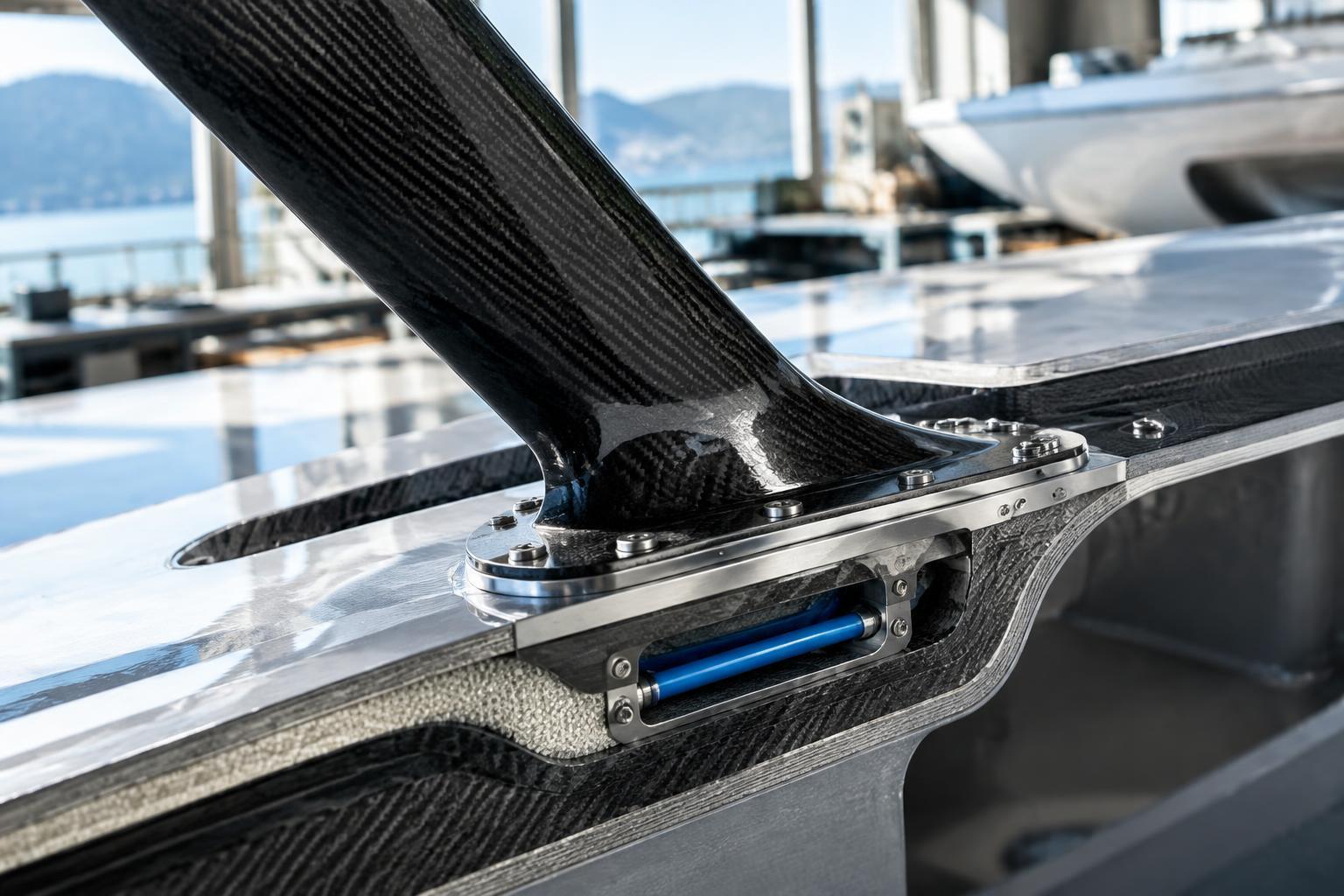
    Hull design and hydrodynamic optimisation are equally important. Hydrodynamics concerns how water flows around a moving vessel. Reducing unnecessary resistance can lower energy demand without increasing battery mass. Depending on the intended use, the development team may assess hull geometry, appendages, propulsion placement, weight distribution and the suitability of hydrofoils. Hydrofoils can reduce hull resistance once a vessel is foil-borne, but they introduce structural, control and operating considerations that are not appropriate for every yacht.

    Prototype in stages rather than as a single build

    A prototype is most useful when it answers defined questions in a sensible sequence. Early work may focus on concept design, digital layouts and weight assessment. This can be followed by a propulsion integration study, a representative systems rig or a demonstrator vessel. A systems rig is a controlled installation that allows key hardware and interfaces to be assessed before they are committed to the final yacht.

    Staged development makes it easier to identify conflicts between components, access routes and cooling connections while changes remain manageable. It also supports more informed decisions about smart navigation functions, energy-management logic and helm displays. These systems should present meaningful operating information without distracting the skipper from navigation. Their final specification depends on the vessel’s intended route, crew model and local operating requirements.

    Compare electric and hybrid pathways fairly

    Fully electric propulsion can offer quiet operation and direct control of onboard energy use, but the available range and performance remain closely linked to battery capacity, vessel resistance, speed profile, charging opportunity and environmental conditions. A hybrid yacht adds another source of onboard energy, which may extend operational flexibility but also adds equipment, weight, integration complexity and maintenance considerations. Neither approach is inherently correct without a clear operating brief.

    Prototype development is the right point to make this comparison with disciplined assumptions rather than attractive headline expectations. It should also distinguish mature, commercially available components from experimental concepts that may require further engineering work before they are suitable for a particular vessel.

    Build a decision-ready engineering scope

    Before appointing a development partner, ask for a scope that explains the questions the prototype will answer, the interfaces included, the decisions needed from the owner and the criteria for progressing to the next stage. It should address hull and structural implications, electrical architecture, battery placement, cooling, propulsion selection and integration with navigation systems. For a closer look at the engineering decisions within the drive package, see this practical guide to integrated marine propulsion planning.

    Take the next practical step

    Begin with a confidential operating brief and a feasibility discussion grounded in the vessel’s intended use. Explore Aqualith Marine projects, propulsion technologies and marine engineering services to define an electric yacht prototype development pathway that matches your technical and commercial objectives.