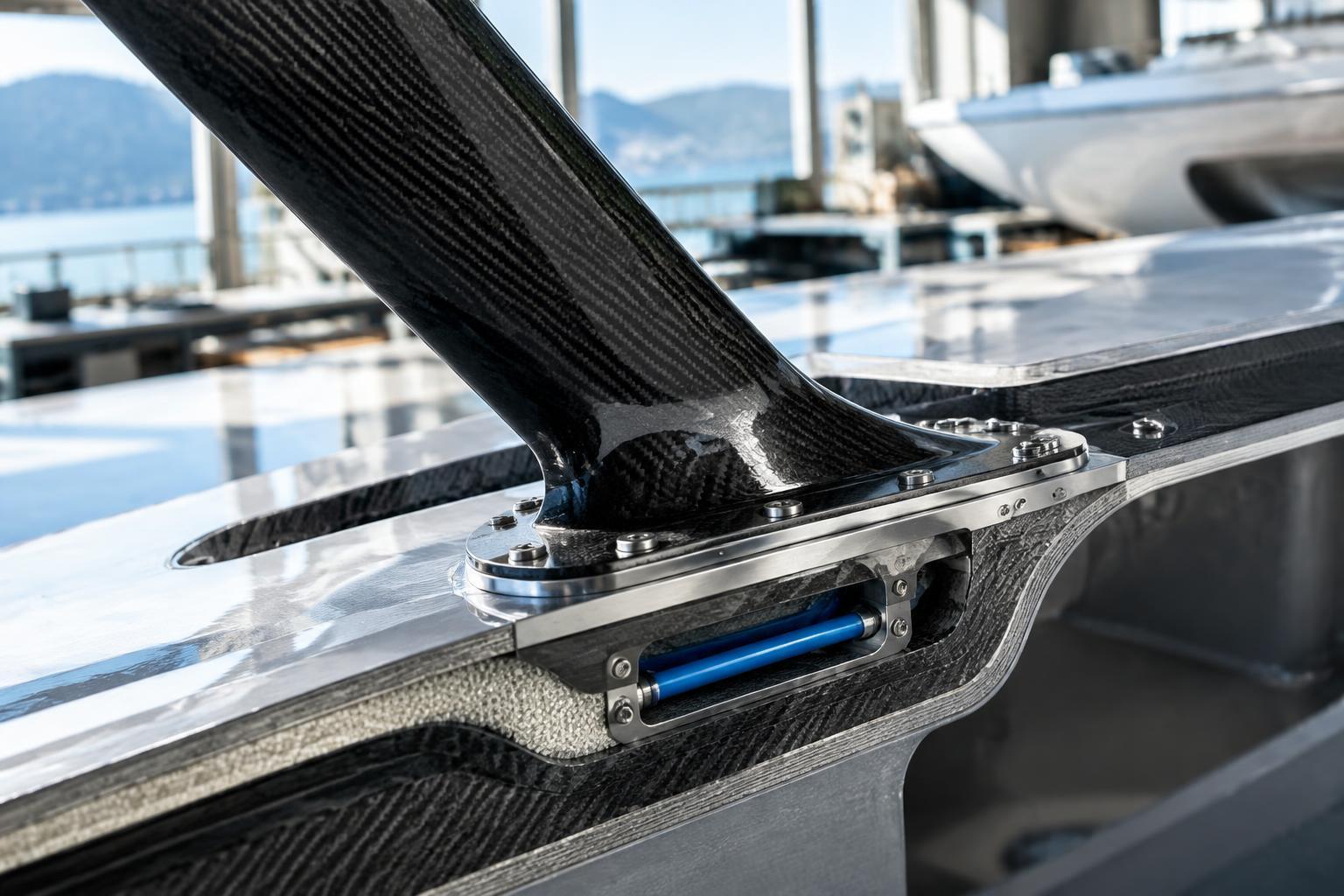
A high performance boat design consultancy brings hull form, propulsion, energy storage and onboard systems into one technically coherent vessel concept. It is most valuable when an owner, builder or investor needs confident design decisions before committing to engineering, tooling or major equipment purchases.
For an electric or hybrid yacht, performance is not simply top speed. It also includes controllability, efficiency at the intended cruising speed, ride quality, noise, range planning, thermal management and practical service access.
What a specialist consultancy should solve
High-performance boats are systems rather than collections of premium components. A powerful electric motor cannot compensate for an inefficient hull, poorly matched propeller, excessive displacement or battery modules positioned without regard for trim and structural load paths.
A consultancy translates the intended use into technical priorities. This begins with an operating profile: expected passenger and payload conditions, typical route lengths, desired speed modes, sea states, berth access, charging opportunities and the level of redundancy required. These inputs determine whether a conventional planing hull, a semi-displacement form, a displacement yacht or a hydrofoil concept is appropriate.
The work should also identify trade-offs early. Larger battery capacity can extend usable energy reserves, but increases weight, volume, cooling demand and cost. Hydrofoils can reduce hydrodynamic drag once flying, yet introduce structural, control-system and low-speed operating considerations. A credible brief makes such compromises visible rather than treating them as afterthoughts.
Core design areas
Hull, structure and hydrodynamics
Hydrodynamics is the study of how water flows around a vessel. In practice, it informs resistance, running trim, wake, stability and ride behaviour. Hull geometry, appendages, propulsor placement and weight distribution must be considered together, especially where efficiency at sea is a central objective.
Depending on project maturity, the consultancy may recommend computational fluid dynamics, commonly called CFD, or model-scale testing. These methods support informed comparisons between viable hull options; they do not remove the need to define realistic loading and operating conditions. Hydrodynamic simulation work can add useful evidence before the design is frozen.
Propulsion and energy integration
Electric propulsion architecture includes motors, inverters, gear reduction where required, shafts or pod drives, propellers, battery modules, charging equipment and control systems. The integration task is to match torque delivery and propeller loading to the hull’s resistance curve while protecting equipment from heat, vibration, moisture and corrosion.
Commercially available electric marine equipment can suit many applications, but it still requires vessel-specific packaging and controls engineering. Prototype components or experimental foil-control systems require a separate validation plan, appropriate risk management and realistic allowances for development time. Cooling, high-voltage isolation, emergency shutdown arrangements and access for inspection should be designed into the vessel from the outset.
A disciplined consultancy process
- Set the mission and constraints. Define how the boat will be used, where it will be kept, who will operate it and which outcomes matter most. Local requirements for construction, operation, charging infrastructure and certification must be checked with the relevant maritime authorities and classification bodies.
- Develop and compare concepts. Establish feasible hull, propulsion and energy-storage layouts. This stage should examine displacement, longitudinal centre of gravity, battery location, machinery space, passenger accommodation and the implications for performance and serviceability.
- Refine the preferred architecture. Use engineering analysis to develop the hull, structure, propulsion arrangement, cooling loops, electrical distribution and smart navigation interfaces. Key assumptions should be documented so that design changes can be evaluated without losing traceability.
- Create an implementation brief. Produce a clear package for naval architects, builders, equipment suppliers and project stakeholders. It should identify interfaces, open technical questions, verification needs and the pathway from concept to detailed engineering or prototype development.
How to select the right consultancy partner
Ask whether the scope connects design decisions across disciplines instead of treating styling, hull shape and machinery as separate exercises. The right team should be able to explain why a proposed configuration suits the operating profile in clear language, while retaining the engineering detail needed by builders and suppliers.
Also establish the deliverables before work begins. Useful outputs may include a requirements brief, general arrangement, weight and centre-of-gravity strategy, propulsion architecture, energy budget assumptions, hydrodynamic study plan and risk register. For a new platform, review the steps in an electric yacht prototype development programme alongside the main design brief.
Move the project forward
Aqualith Marine can help shape an integrated route from early vessel concept through hydrodynamic optimisation, propulsion development, battery integration and smart navigation planning. Explore Aqualith Marine engineering services to define a high-performance yacht project around the way it will actually operate.
Leave a Reply