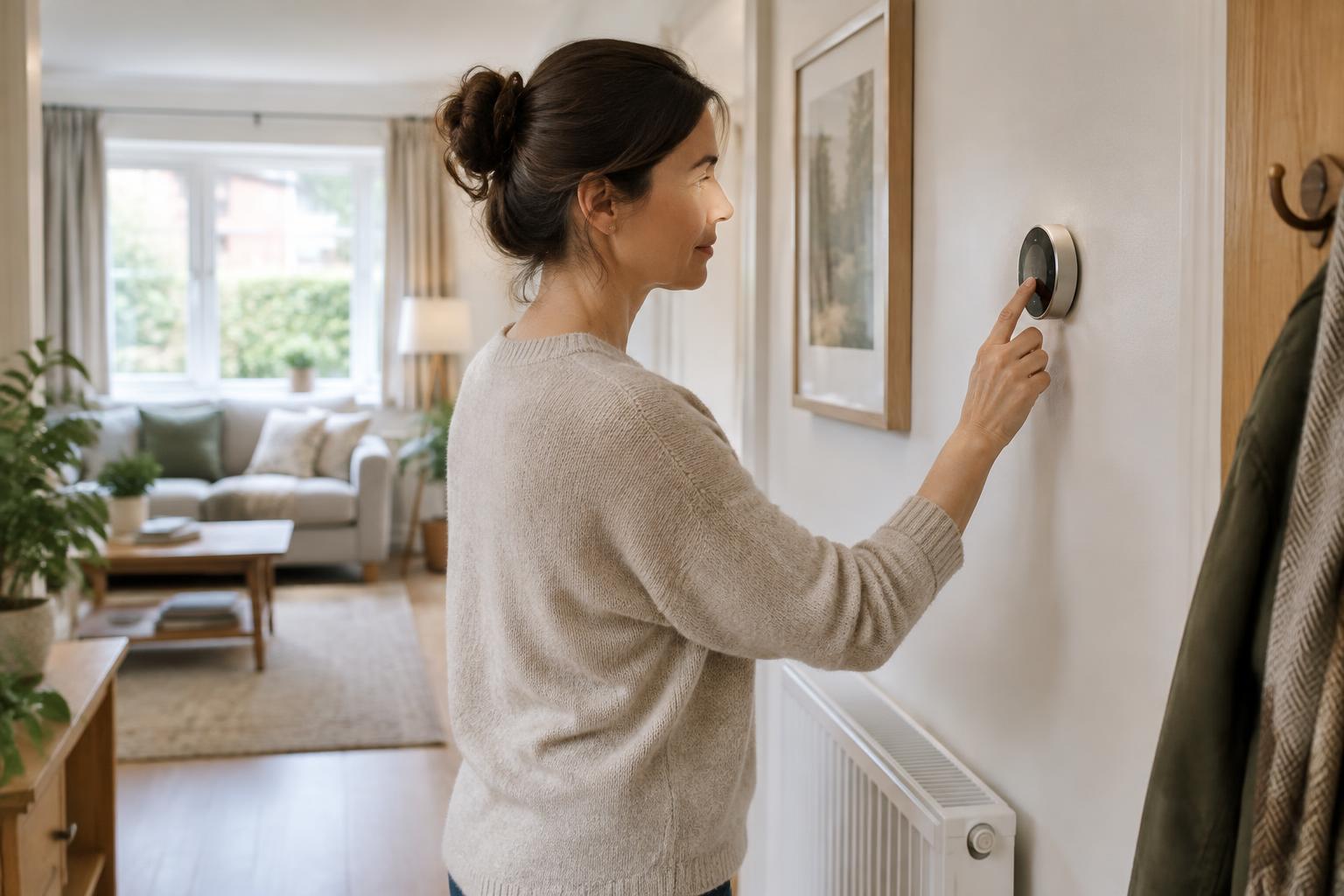
Are smart thermostats worth buying? For many UK households, yes: they can make heating easier to control and help reduce avoidable energy use. They are most worthwhile when your current heating schedule is poorly matched to how you use your home, but they cannot compensate for poor insulation, draughts or an incorrectly set-up heating system.
A smart thermostat replaces or works alongside a conventional heating controller. It connects to an app, allowing you to adjust heating remotely, set schedules and, with some models, use features such as geolocation or room-by-room controls. The right choice depends on your boiler or heat pump, existing controls, household routine and appetite for managing settings.
What makes a smart thermostat worth the cost?
A standard programmable thermostat can also control heating on a schedule. The main advantage of a smart model is flexibility. Instead of heating the house to a fixed timetable every day, you can make changes when plans change and build a schedule around how rooms are actually used.
Smart controls tend to offer the best value where heating is regularly left on unnecessarily, where household routines vary, or where it is difficult to reach the existing controls. They may be less compelling if you already use a well-programmed conventional thermostat, have a highly predictable routine and are happy with your current system.
Situations where smart controls can help
- You often leave home earlier or return later than expected.
- Your heating runs on a basic timer with limited scheduling options.
- You want to lower the temperature when the home is empty without remembering to alter controls.
- You have zones or smart radiator valves and want more control over rooms that are used at different times.
- You are improving insulation or planning a wider sustainable renovation and want clearer control of the heating system afterwards.
When to solve another problem first
If rooms feel cold even when the thermostat is set high, first investigate heat loss, draughts, radiator performance or heating-system faults. A thermostat controls when heat is requested; it does not create heat or stop it escaping through an uninsulated roof, walls, floor or gaps around openings.
For this reason, a home energy assessment can be useful before buying multiple smart devices. It helps identify whether controls are likely to be the priority, or whether insulation advice and heating-system adjustments should come first.
Can smart thermostats reduce bills?
Smart thermostats can reduce bills when they help you avoid heating an empty home or overheating rooms. The saving is not automatic, and it varies widely with the property, fuel type, starting settings, weather and household habits. A device that is installed but left on a permanently high temperature will not deliver the same benefit as one with a realistic schedule.
The most useful features are normally straightforward ones: a clear schedule, temporary temperature changes, holiday settings and alerts that make it easier to notice unusual heating behaviour. Some systems learn a household routine or respond to phone location. These can be convenient, but should be checked carefully: geolocation can be unhelpful if one person remains at home or if several household members have different routines.
A practical example
Consider a household that normally heats the home before everyone gets up and again before the evening. On an unexpected day out, a conventional programme may continue as planned. With a smart thermostat, the household can reduce the target temperature remotely and restore comfort before returning. The benefit comes from avoiding unnecessary heating during that period, not from the thermostat somehow making the boiler more efficient.
Review the settings after the first few weeks of use. If rooms are comfortable before the programmed start time, try bringing the start time forward less. If a room is consistently too warm, check the thermostat location and radiator valve settings rather than simply lowering the temperature blindly.
Choosing the best smart thermostat for saving energy
There is no single best smart thermostat for saving energy in every property. The best option is one that is compatible with your heating system, simple enough for everyone in the home to use and configured to avoid waste.
| What to check |
Why it matters |
Practical question |
| Heating compatibility |
Controls must communicate correctly with the boiler, heat pump or existing wiring. |
Does the manufacturer list your heating system and control arrangement as compatible? |
| Heating zones |
A single thermostat may not suit a home with independently controlled areas. |
Do upstairs, downstairs or separate rooms need different schedules? |
| Temperature sensor location |
A poorly positioned sensor can cause underheating or overheating. |
Is it away from direct sun, draughts, kitchens and nearby heat sources? |
| App and manual controls |
Reliable daily use matters more than a long list of features. |
Can everyone adjust the heating easily if the internet is unavailable? |
| Data and connectivity |
Most smart functions rely on a stable home network and account access. |
Are you comfortable with the app permissions and ongoing manufacturer support? |
Do not choose solely on the basis of a claimed saving. Focus on compatibility and useful control. Before purchase, take photographs of the existing thermostat, programmer and boiler or heat-pump controls, then check the manufacturer guidance or ask a suitably competent installer.
Smart thermostats and heat pumps
The best smart thermostat for a heat pump is not necessarily the same as the best option for a gas boiler. Heat pumps generally work most effectively when they maintain a steady, lower flow temperature over longer periods, rather than delivering short bursts of high heat. Controls designed around aggressive on-and-off boiler schedules can therefore be a poor fit.
When comparing the best smart thermostat for heat pumps, check that it supports your specific heat-pump system and its recommended control method. Some heat pumps use weather compensation, which adjusts the heating water temperature in response to outdoor conditions. This can be an important part of efficient operation, so avoid disabling or overriding it without advice from the installer or manufacturer.
Heat-pump control checklist
- Confirm compatibility with the heat pump, not just with a generic “central heating” system.
- Ask whether the system should run with a stable indoor set temperature.
- Check how the thermostat works alongside weather compensation and any manufacturer controls.
- Avoid large daily setbacks unless the system designer recommends them for your property.
- Make changes gradually and monitor comfort before altering several settings at once.
If you are considering a heat pump as part of a wider upgrade, controls should be discussed alongside insulation, heat loss and radiator or emitter suitability. GreenNest Living can provide heat pump guidance and sustainable renovation planning as part of a whole-home approach.
Should you add smart radiator valves or energy monitoring?
Smart radiator valves can add room-by-room timing and temperature control, particularly in homes where bedrooms, home offices and living spaces have different patterns of use. However, they need careful set-up. Closing too many valves can affect water flow through some heating systems, so follow the heating-system guidance and retain the required bypass or open circuit where applicable.
Home energy monitoring is different: it measures or displays electricity use, and some systems help identify when particular appliances are drawing power. It may complement heating controls, especially in electrically heated homes, but it does not directly control space heating unless integrated with compatible equipment.
If you are searching for home energy monitoring installation near me, ask prospective providers what the monitor measures, whether installation is required, how data is accessed and whether it is compatible with your consumer unit and smart meter arrangement. The right approach depends on your electrical set-up and what you want to learn or control.
A simple decision process before you buy
- Identify your heating system. Note whether you have a boiler, heat pump, electric heating or a mixed system, plus any existing thermostat, programmer and zones.
- Check the basics. Make sure the current thermostat is positioned sensibly and the heating schedule reflects your normal routine.
- Define the problem. Is the issue forgotten heating, uneven room temperatures, remote control, unclear energy use or persistent cold?
- Compare compatible controls. Prioritise the functions you will actually use and check support for your system.
- Plan installation. Wiring, receiver location and system configuration can matter. Use an appropriate installer where the work is beyond simple replacement.
- Set, review and refine. Begin with a comfortable, realistic schedule, then adjust one setting at a time.
Make smart controls part of a better home-energy plan
A smart thermostat is a practical upgrade when it gives your household better control over heating and helps prevent routine waste. It is not a substitute for a well-maintained heating system and a fabric-efficient home, but it can support both by making the results of wider improvements easier to manage.
If you want to understand where controls fit within your property’s priorities, request a home energy assessment with GreenNest Living. The assessment can help you consider heating controls alongside insulation advice, heat-pump guidance and smart-home energy optimisation, based on how your home is used.
Frequently asked questions
Do smart thermostats reduce heating bills in every home?
No. They can reduce heating bills when they help a household avoid heating unused spaces or an empty home, but savings depend on how the system was previously controlled and how the home is used. Insulation levels, heating-system condition and settings also affect the outcome.
Can I install a smart thermostat myself?
Some products are designed for straightforward replacement, but others involve wiring to a boiler, receiver or heating controls. Check the manufacturer instructions and use an appropriately competent installer if electrical or heating-system work is needed.
Will a smart thermostat work with an old boiler?
It may, but compatibility depends on the boiler controls, wiring and whether the system uses a standard switching arrangement or a manufacturer-specific control. Check the thermostat manufacturer’s compatibility information before buying.
Are smart thermostats suitable for heat pumps?
They can be, provided the control is compatible with the specific heat pump and does not interfere with its recommended operating strategy. Heat pumps often benefit from stable settings and weather compensation, so seek system-specific guidance before changing controls.
Is a smart meter the same as a smart thermostat?
No. A smart meter records energy consumption for billing and can display usage information, while a smart thermostat controls heating temperatures and schedules. Both may help you make informed energy decisions, but they perform different jobs.
{“@context”:”https://schema.org”,”@type”:”FAQPage”,”mainEntity”:[{“@type”:”Question”,”name”:”Do smart thermostats reduce heating bills in every home?”,”acceptedAnswer”:{“@type”:”Answer”,”text”:”No. They can reduce heating bills when they help a household avoid heating unused spaces or an empty home, but savings depend on how the system was previously controlled and how the home is used. Insulation levels, heating-system condition and settings also affect the outcome.”}},{“@type”:”Question”,”name”:”Can I install a smart thermostat myself?”,”acceptedAnswer”:{“@type”:”Answer”,”text”:”Some products are designed for straightforward replacement, but others involve wiring to a boiler, receiver or heating controls. Check the manufacturer instructions and use an appropriately competent installer if electrical or heating-system work is needed.”}},{“@type”:”Question”,”name”:”Will a smart thermostat work with an old boiler?”,”acceptedAnswer”:{“@type”:”Answer”,”text”:”It may, but compatibility depends on the boiler controls, wiring and whether the system uses a standard switching arrangement or a manufacturer-specific control. Check the thermostat manufacturer’s compatibility information before buying.”}},{“@type”:”Question”,”name”:”Are smart thermostats suitable for heat pumps?”,”acceptedAnswer”:{“@type”:”Answer”,”text”:”They can be, provided the control is compatible with the specific heat pump and does not interfere with its recommended operating strategy. Heat pumps often benefit from stable settings and weather compensation, so seek system-specific guidance before changing controls.”}},{“@type”:”Question”,”name”:”Is a smart meter the same as a smart thermostat?”,”acceptedAnswer”:{“@type”:”Answer”,”text”:”No. A smart meter records energy consumption for billing and can display usage information, while a smart thermostat controls heating temperatures and schedules. Both may help you make informed energy decisions, but they perform different jobs.”}}]}