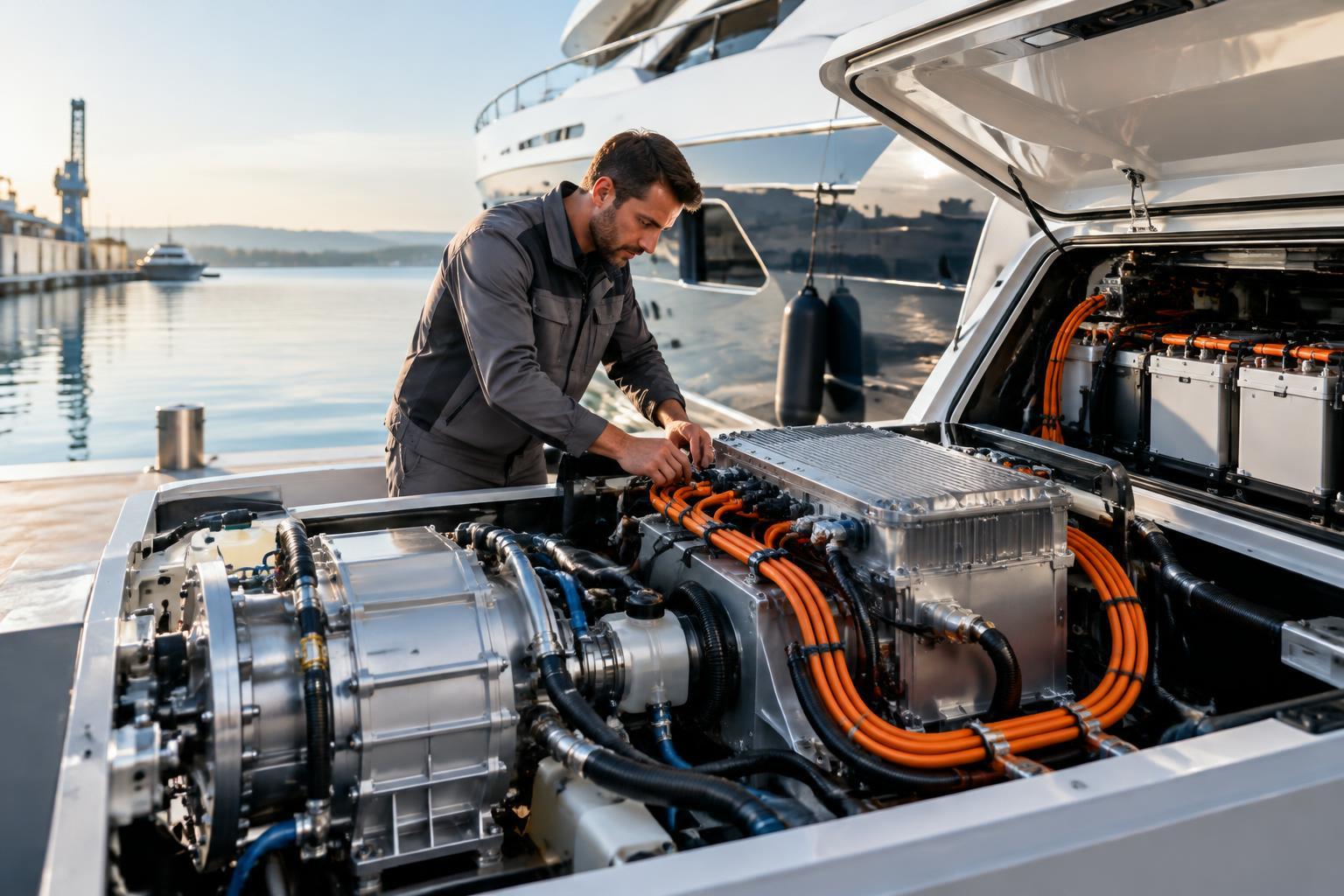
Electric marine propulsion system development is the engineering process of matching electric motors, energy storage, power electronics, cooling, controls and propulsors to a specific vessel and its real operating profile. A successful project starts with the yacht’s intended use, because hull form, desired speed, time underway and access to charging determine whether a fully electric or hybrid architecture is the more practical choice.
For owners and project teams, the aim is not simply to replace an engine. It is to create a balanced onboard energy system that delivers predictable handling, dependable auxiliary power and an installation that can be maintained safely throughout the vessel’s life.
Begin with the operational brief
The design brief should establish how the vessel will actually be used: displacement cruising, planing passages, harbour manoeuvring, watersports, tender duty or a combination of these. It should also identify typical route lengths, overnight stops, shore-power availability, onboard hotel loads and expected weather and sea conditions.
This step defines the energy budget. Hotel loads are the electrical demands outside propulsion, such as climate control, galley equipment, lighting and navigation electronics. On a premium yacht, these loads can materially affect the energy remaining for propulsion, particularly during extended anchoring.
Hull and propulsor are part of the powertrain
Electric motors provide strong torque from low rotational speed, but that advantage only becomes useful when the propeller, drive arrangement and hull resistance are considered together. Hydrodynamic optimization evaluates how efficiently the hull moves through water and how cleanly water reaches and leaves the propulsor.
A slender displacement hull generally suits quiet, efficient electric cruising. A planing hull can also be electrified, but high-speed operation places much greater demand on battery capacity, thermal management and charging infrastructure. Hydrofoils can reduce hull drag once airborne, yet their suitability depends on route conditions, vessel mission, structural design and operational expectations. They should be assessed as a complete vessel concept rather than added as a styling feature.
Develop the architecture around the mission
Core components include the electric motor or motors, inverter, battery system, battery-management system, charging equipment, distribution hardware and control software. The inverter converts battery direct current into the controlled electrical supply used by the motor. The battery-management system monitors battery condition and helps manage charging, discharging and protection functions.
System layout matters as much as component selection. Battery mass influences trim, stability and structural loading. Cable routes require appropriate protection, isolation and service access. Inverters, motors and batteries produce heat under load, so cooling circuits must be designed for the expected duty cycle and the marine environment. Saltwater exposure, vibration, humidity and confined machinery spaces make marine integration more demanding than a simple land-based conversion.
Choose between fully electric and hybrid propulsion
Fully electric propulsion is commercially available and can be well suited to vessels with predictable daily use, practical charging and a mission aligned with available onboard energy. Its principal advantages are quiet running, immediate torque and the potential for simpler mechanical architecture.
Hybrid yachts combine electric propulsion with another onboard energy source. They may offer greater operational flexibility where charging is uncertain or longer passages are essential, but introduce additional machinery, controls, weight and integration complexity. The appropriate choice depends on the vessel’s route, desired autonomy and charging reality—not on a generic range claim.
A focused development checklist
- Define speeds, routes, occupancy and hotel-load priorities.
- Assess hull resistance, propulsor options, weight distribution and available machinery volume.
- Model energy demand across representative operating modes.
- Specify battery placement, cooling, charging interfaces and high-voltage safety strategy.
- Integrate navigation, monitoring and control logic with the vessel’s wider electrical system.
- Review service access, emergency procedures and applicable local rules before installation.
Design charging and smart control early
Charging should be planned alongside the propulsion system, not after it. The available shore connection, berth time, marina equipment and local electrical requirements can shape battery capacity and operating procedures. Requirements vary by location, so project teams should confirm applicable rules with the relevant marina operator, vessel authority and qualified marine professionals.
Smart navigation solutions can support more informed energy management by presenting route, speed and system information in one operational view. Used properly, this helps the captain choose an efficient passage profile while maintaining clear separation between advisory data and safe navigational decision-making.
Move from concept to an engineered vessel
Electric propulsion delivers its best results when engineering decisions are made early enough to influence hull design, machinery spaces and onboard systems. Explore Aqualith Marine projects, propulsion technologies and marine engineering consulting to develop an electric yacht system around the way your vessel will actually operate.
Leave a Reply