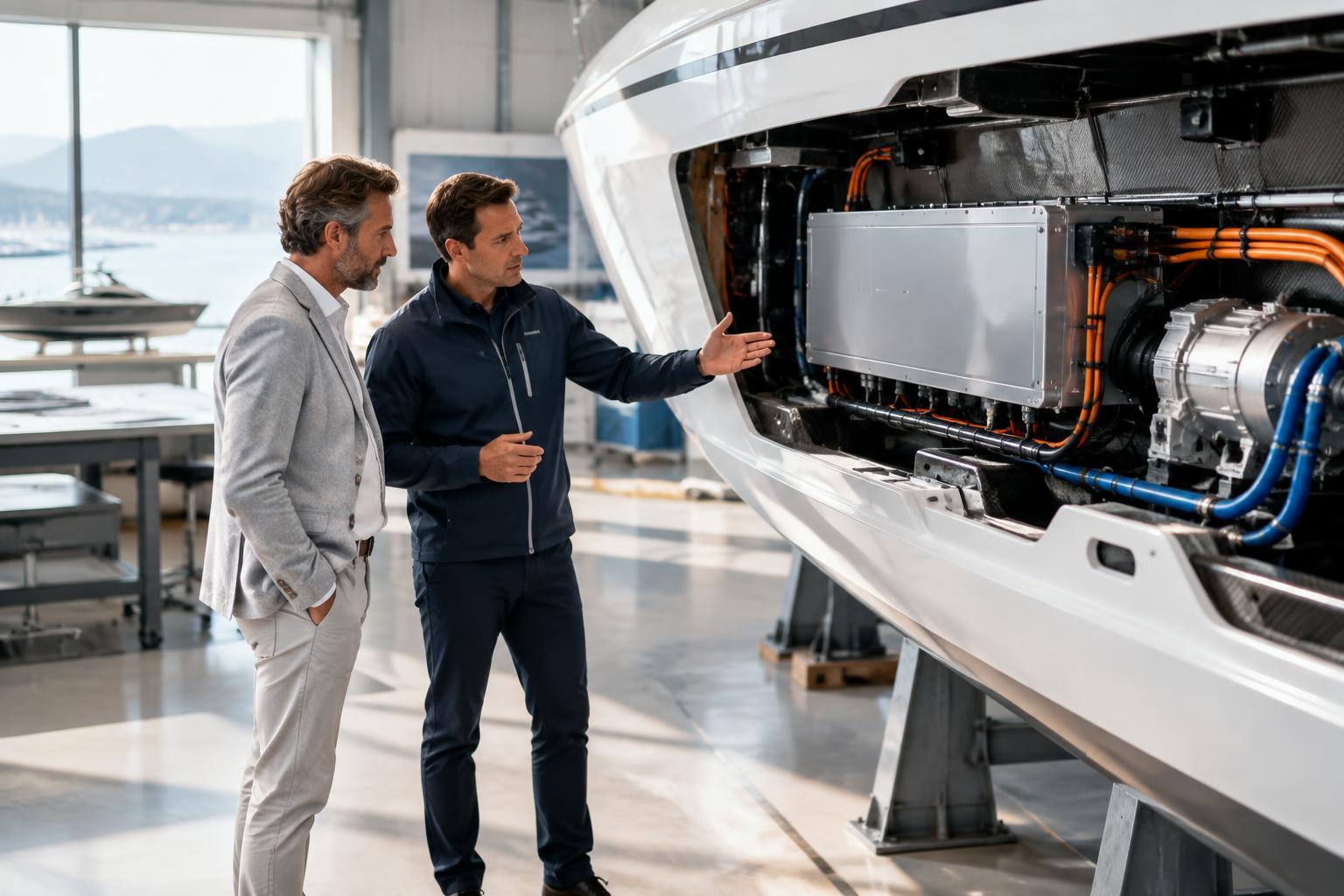
Electric yacht prototype development is the process of turning a defined operating brief into a buildable vessel and then validating how its propulsion, battery, hull and control systems work together. For an owner, investor or yard, a well-scoped prototype programme creates a clearer basis for deciding whether to proceed with a bespoke yacht, a refit or a future production platform.
It is not simply the installation of an electric motor in an existing hull. A credible prototype considers the entire energy chain: stored electrical energy, power delivery, cooling, propulsion, hydrodynamic resistance and the operating interface. The earlier these decisions are connected, the less likely the project is to encounter costly compromises once construction is underway.
Start with an operational brief
The development brief should describe how the yacht will actually be used rather than begin with a preferred motor or battery capacity. Relevant questions include expected cruising pattern, time spent at low speed, intended performance characteristics, passenger load, shore-power access, marina manoeuvring requirements and typical sea conditions. A yacht designed for short, quiet coastal passages faces a different engineering problem from a vessel expected to sustain higher-speed running or operate away from reliable charging infrastructure.
This brief establishes the energy budget. An energy budget maps where electrical energy is consumed, from propulsion and hotel loads to pumps, navigation equipment and climate control. Hotel loads are the onboard services that support comfort and operation but do not move the yacht. Their effect can be material, particularly when the vessel is stationary or operating over extended periods.
Turn the brief into a viable architecture
The propulsion architecture connects the battery system, power electronics, electric motors, transmission and propulsor. Power electronics manage the flow of electricity between batteries and motors, while the propulsor is the component that converts motor output into thrust, such as a propeller or waterjet. Each choice affects packaging, service access, thermal management and the vessel’s handling characteristics.
Marine battery integration requires more than finding available volume. Battery mass affects displacement, trim and centre of gravity, which can alter hull attitude and resistance through the water. Battery enclosures, high-voltage cabling, isolation measures, ventilation and cooling circuits must be planned as a coordinated installation. Cooling deserves particular attention because batteries, inverters and motors each operate within defined temperature limits, while ambient air and water conditions can vary substantially.
Hull design and hydrodynamic optimisation are equally important. Hydrodynamics concerns how water flows around a moving vessel. Reducing unnecessary resistance can lower energy demand without increasing battery mass. Depending on the intended use, the development team may assess hull geometry, appendages, propulsion placement, weight distribution and the suitability of hydrofoils. Hydrofoils can reduce hull resistance once a vessel is foil-borne, but they introduce structural, control and operating considerations that are not appropriate for every yacht.
Prototype in stages rather than as a single build
A prototype is most useful when it answers defined questions in a sensible sequence. Early work may focus on concept design, digital layouts and weight assessment. This can be followed by a propulsion integration study, a representative systems rig or a demonstrator vessel. A systems rig is a controlled installation that allows key hardware and interfaces to be assessed before they are committed to the final yacht.
Staged development makes it easier to identify conflicts between components, access routes and cooling connections while changes remain manageable. It also supports more informed decisions about smart navigation functions, energy-management logic and helm displays. These systems should present meaningful operating information without distracting the skipper from navigation. Their final specification depends on the vessel’s intended route, crew model and local operating requirements.
Compare electric and hybrid pathways fairly
Fully electric propulsion can offer quiet operation and direct control of onboard energy use, but the available range and performance remain closely linked to battery capacity, vessel resistance, speed profile, charging opportunity and environmental conditions. A hybrid yacht adds another source of onboard energy, which may extend operational flexibility but also adds equipment, weight, integration complexity and maintenance considerations. Neither approach is inherently correct without a clear operating brief.
Prototype development is the right point to make this comparison with disciplined assumptions rather than attractive headline expectations. It should also distinguish mature, commercially available components from experimental concepts that may require further engineering work before they are suitable for a particular vessel.
Build a decision-ready engineering scope
Before appointing a development partner, ask for a scope that explains the questions the prototype will answer, the interfaces included, the decisions needed from the owner and the criteria for progressing to the next stage. It should address hull and structural implications, electrical architecture, battery placement, cooling, propulsion selection and integration with navigation systems. For a closer look at the engineering decisions within the drive package, see this practical guide to integrated marine propulsion planning.
Take the next practical step
Begin with a confidential operating brief and a feasibility discussion grounded in the vessel’s intended use. Explore Aqualith Marine projects, propulsion technologies and marine engineering services to define an electric yacht prototype development pathway that matches your technical and commercial objectives.
Leave a Reply