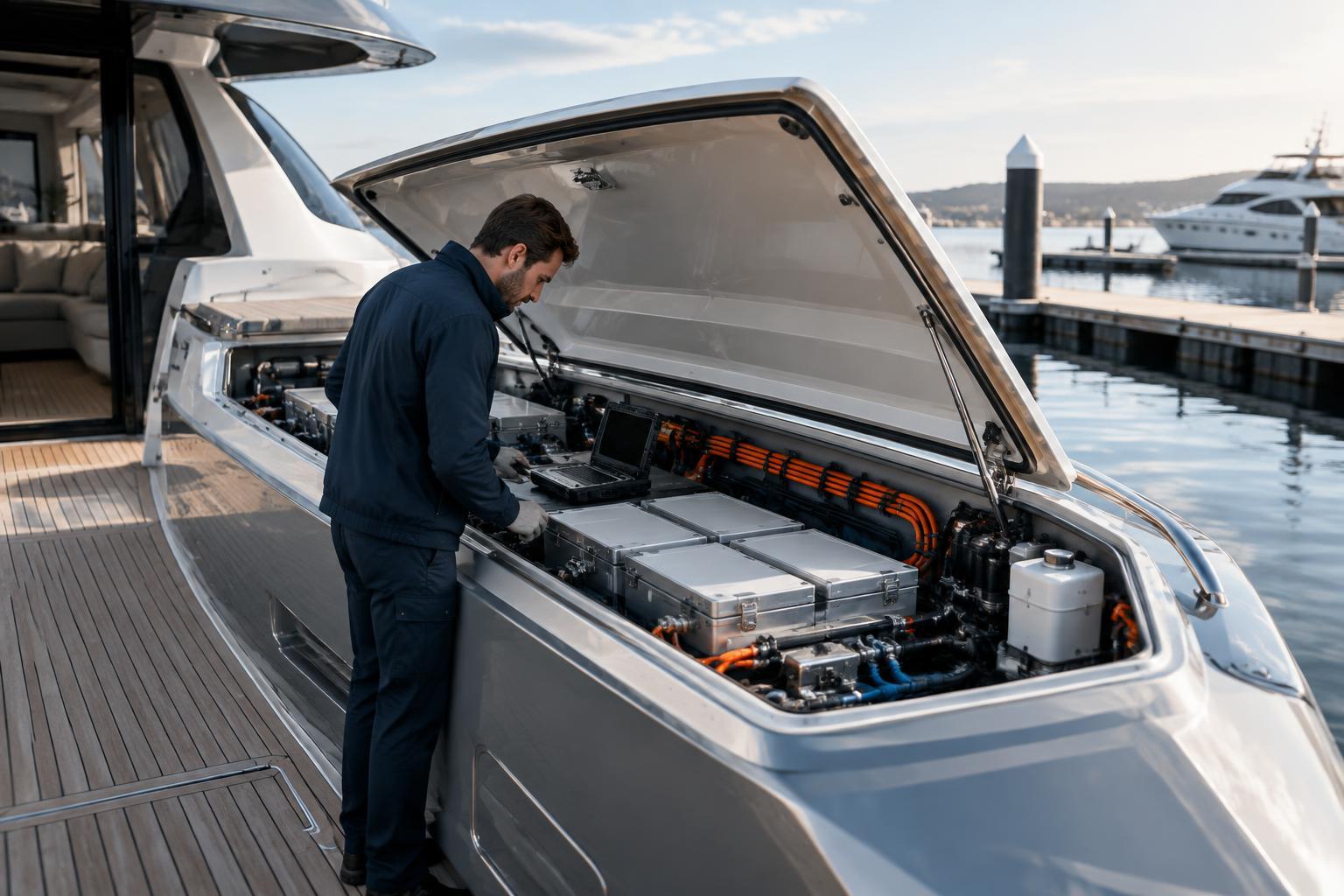
An electric boat range optimization service is an engineering-led assessment of how a vessel uses stored energy, where losses occur, and which changes can improve usable range for its intended operating profile. It should translate technical findings into practical design, equipment and operating decisions rather than promise a universal range figure.
Range is shaped by the complete vessel, not the battery bank alone. Hull resistance, speed, displacement, propulsion matching, onboard electrical loads, water conditions and charging access all affect how far an electric yacht can travel between charges.
Start with the boat’s real operating profile
A credible service begins by defining how the vessel is actually used. A quiet harbour shuttle, a coastal day boat and a high-performance yacht can require very different energy strategies, even when their overall size appears similar.
The assessment should establish typical route length, desired cruising and manoeuvring behaviour, passenger or payload variation, time spent at anchor, shore-power availability and expected sea states. Wind, waves, current, water temperature and hull fouling can materially change energy consumption, so predictions should be tied to stated assumptions.
This operating profile becomes the basis for an energy model: a calculation that connects propulsion demand and hotel loads to the usable energy available onboard. Hotel loads are the non-propulsion consumers, such as climate control, lighting, navigation equipment and galley systems.
What the optimization process should examine
The order matters because early decisions determine whether later equipment changes are worthwhile. A disciplined review normally follows this sequence:
- Record baseline performance. Gather the vessel’s existing configuration, battery architecture, motor and drive arrangement, charging equipment, loading condition and available operational data. Where data is incomplete, the uncertainty should be made clear rather than concealed behind a precise-looking estimate.
- Map energy use by operating mode. Separate low-speed manoeuvring, displacement cruising, planing where applicable, station keeping and hotel consumption. This reveals whether propulsion, auxiliary demand or a combination of both is limiting range.
- Review battery integration and thermal management. Usable battery energy depends on operating limits, system controls, temperature and battery condition. The review should also examine enclosure layout, cabling, protection, cooling circuits and service access, as these affect reliability, weight distribution and maintainability.
- Evaluate hydrodynamic and propulsion losses. Hydrodynamic optimization considers how the hull, appendages, propeller or waterjet arrangement and trim move through water. A propulsion review then checks whether the motor, inverter, reduction gear where fitted, and propulsor are appropriately matched to the intended speed range.
- Develop and prioritise improvement options. Recommendations should compare the expected operational benefit, technical dependencies, space and weight implications, charging requirements and disruption to the vessel. The best path may be operational, mechanical, electrical or a combination of these.
Where meaningful range gains can come from
Hull condition, drag and trim
Resistance rises with speed, and unnecessary drag can consume energy that no battery upgrade will recover. Hull cleanliness, appendage geometry, loading distribution and running trim deserve attention before major electrical changes are specified. For a new build or refit, composite materials and hull design may also create opportunities to manage weight and stiffness, but these decisions require vessel-specific structural engineering.
Propulsion system matching
High-performance electric motors provide responsive torque, but motor power alone does not determine efficient cruising. The motor, power electronics and propulsor must operate effectively across the speeds the owner uses most. An oversized or poorly matched system can carry avoidable mass or operate away from its most suitable efficiency range; an undersized system may compromise handling or performance reserve.
Smart energy-aware navigation
Route planning can support range when it combines intended speed, distance, weather, current and charging opportunities with live energy information. A well-integrated navigation and energy display can help the operator make informed decisions while underway. It should support judgement, not replace proper passage planning or local navigational requirements.
What to expect in a useful recommendation
A valuable report distinguishes no-regret maintenance or operational actions from modifications that need detailed design. It should also identify trade-offs. Adding battery capacity may increase usable energy, for example, but it adds weight, requires suitable cooling and protection, and may affect space, trim, charging time and shore-power infrastructure.
Likewise, hydrofoils can reduce hydrodynamic resistance in suitable applications, but foil systems introduce design, control, operating-condition and maintenance considerations. They are not an automatic solution for every hull or mission.
Plan the next engineering decision
Before commissioning work, provide accurate vessel drawings, equipment information, operational records and a clear statement of intended use. Aqualith Marine can support the next stage through propulsion development, marine battery integration, hydrodynamic optimization and engineering consulting tailored to the vessel’s operating conditions. Explore Aqualith Marine projects and technologies to begin a focused range assessment.
Leave a Reply