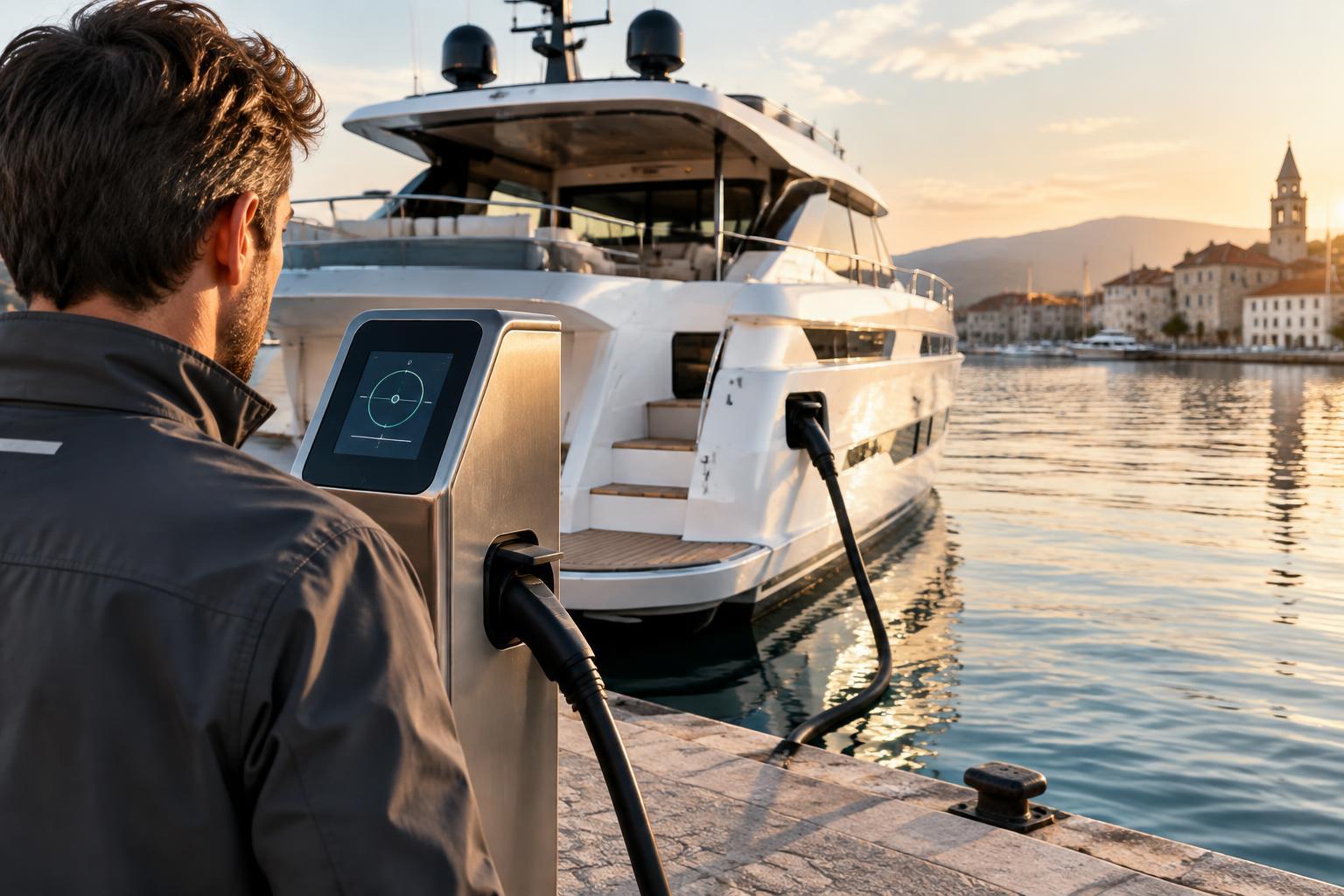
Zero emission yacht propulsion systems are most commonly battery-electric drivetrains that propel a yacht without onboard exhaust emissions. The right system is not defined by motor power alone: it must balance the vessel’s hull, intended speed, duty cycle, battery capacity, cooling arrangement and available charging infrastructure.
For owners and project teams, the commercial question is straightforward: can the yacht perform its planned journeys with an appropriate energy reserve, then recharge safely and conveniently between uses? Answering it requires an integrated engineering approach rather than selecting components in isolation.
What “zero emission” means on the water
A battery-electric yacht uses stored electrical energy to supply an inverter, which converts battery power into the controlled electrical output required by the motor. The motor then drives a propeller, waterjet or other propulsion device. During operation, this arrangement produces no exhaust emissions at the yacht.
That definition does not automatically describe the emissions associated with generating shore electricity, producing equipment or building the vessel. For a credible project assessment, distinguish zero onboard emissions from whole-life environmental impact. The latter depends on the energy source, vessel materials, battery servicing strategy and operational pattern.
Battery-electric propulsion is commercially available for suitable yacht applications. Hydrogen fuel-cell systems can also generate electricity onboard with water as their direct exhaust product, but fuel storage, supply access, system packaging and project complexity require case-specific evaluation. They should not be treated as a simple substitute for a battery bank.
The core architecture of an electric yacht
A complete propulsion system links energy storage, power electronics, propulsion machinery and vessel controls. Each part affects the others. A larger battery may extend usable operating time, for example, but it also changes displacement, space allocation, structural support, cooling needs and charging time.
- Marine battery system: protected energy storage with monitoring, isolation and thermal management.
- Inverter and motor: the inverter regulates power delivery; the motor converts that electrical power into shaft torque.
- Transmission and propulsor: the mechanical path from motor to propeller, waterjet or pod must suit the hull and operating speeds.
- Energy management: controls that coordinate propulsion demand, charging, onboard loads and protective responses.
High torque at low rotational speed is a useful characteristic of electric motors, particularly for manoeuvring and direct-drive arrangements. It does not remove the need for careful propeller matching. Propeller diameter, pitch, blade area and cavitation behaviour all influence efficiency, vibration and acoustic comfort.
Start with the operating profile
The most important specification input is how the yacht will actually be used. A tender making short harbour transfers, a quiet coastal day yacht and a performance-focused planing yacht place very different demands on a battery-electric system. Continuous high-speed operation consumes energy far more quickly than low-speed displacement cruising.
Hull efficiency sets the baseline
Hydrodynamic resistance is the force a yacht must overcome to move through water. Hull form, displacement, appendages, surface condition and speed all influence it. Efficient hull design can reduce the energy required for a given operating profile, potentially allowing a more practical battery installation without compromising the intended experience.
Foil-assisted and hydrofoil concepts can reduce hull drag once operating conditions permit lift generation. However, they add structural, control and operational considerations. Their value depends on the route, sea state, loading condition, speed range and owner priorities; they are not automatically the correct solution for every yacht.
Battery, cooling and charging limitations
Marine batteries require robust enclosure design, electrical protection, ventilation considerations and monitoring. Cooling is equally important. Motors, inverters and batteries generate heat under load, and a cooling circuit must manage it reliably in the expected ambient and seawater conditions. Equipment access also matters: serviceable routing for cables, hoses and isolation devices should be planned early.
Charging capability should be assessed against the places where the yacht will berth, not an idealised future network. Verify available shore supply, connector compatibility, berth dwell time and any marina operating restrictions. Local electrical and maritime requirements vary, so the project team should confirm applicable rules with the relevant official authority and qualified specialists before installation.
Specify the system as one engineered package
A strong specification connects vessel performance targets with energy modelling, weight distribution, electrical safety, thermal management and control logic. It should also account for hotel loads: the energy used by onboard comfort, navigation and auxiliary systems can materially affect the propulsion energy available.
For complex new-build or refit work, a structured propulsion-development process helps align the hull, drive train and battery integration before major design decisions become difficult to change.
Move from ambition to an executable brief
Begin with routes, passenger and payload expectations, desired speed bands, time at berth and charging access. Aqualith Marine can support electric propulsion development, battery integration, hull optimisation and marine engineering decisions that turn those inputs into a coherent yacht concept. Explore Aqualith Marine projects and engineering services to define a system suited to the yacht’s real operating environment.
Leave a Reply